Ottawa and South Korea sign MOU that opens talks on auto manufacturing in Canada
A non-binding MOU between Canada and South Korea includes early-stage talks on building vehicles, parts and batteries in Canada, linked to defence procurement and industrial benefits.
Copy link
By Torontoer Staff
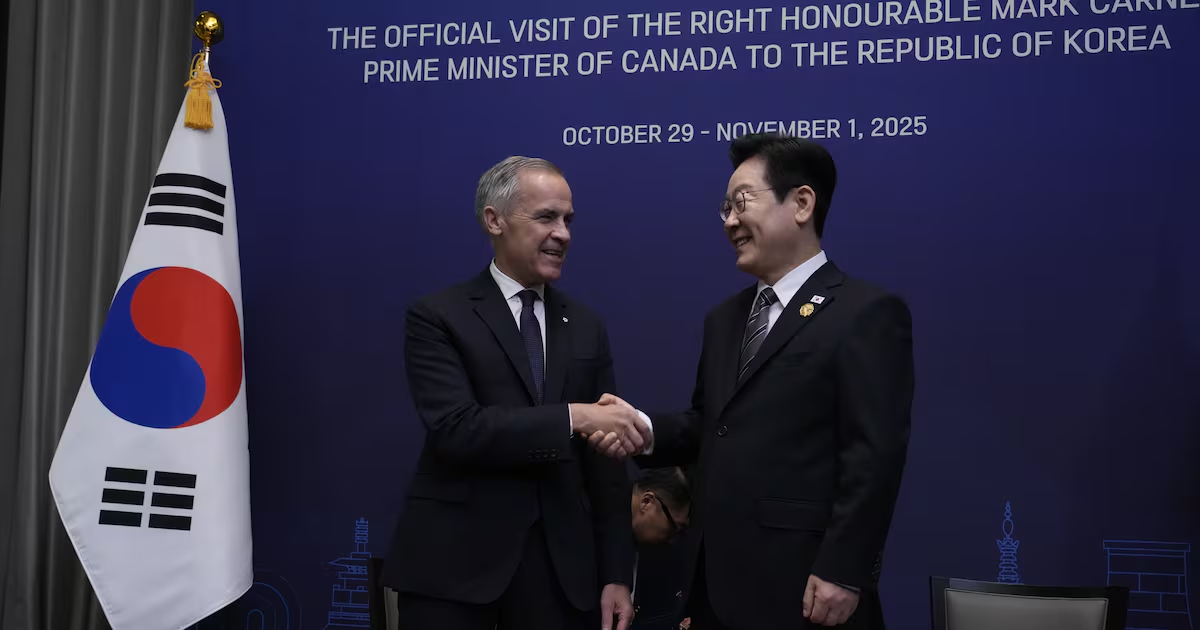
The federal government has signed a non-binding memorandum of understanding with the Republic of Korea that includes discussions about bringing auto manufacturing, parts and battery production to Canada, two sources told CTV News. The MOU was signed after a meeting in Ottawa between Industry Minister Melanie Joly and South Korea’s Industry Minister Jung-Kawn Kim.
Officials described the move as part of broader industrial cooperation on the “future of mobility.” The talks are at an early stage and do not commit either country to specific investments.
What the agreement covers
The MOU calls for closer ties on automotive technology and supply chains, including potential discussions around manufacturing vehicles, auto parts and batteries in Canada. Delegates at a Canada-Korea auto forum in Toronto included representatives from Hyundai and Hanwha Ocean, and several Canadian auto executives used the event to pitch Korean automakers on moving production north.
Who is involved
South Korean delegates included Hyundai and Hanwha Ocean. Hanwha, which has partnered with Hyundai in recent defence bids, is among two main bidders shortlisted by Ottawa to replace the Royal Canadian Navy’s conventional submarines. The other shortlisted company is German shipbuilder ThyssenKrupp Marine Systems, often referred to as TKMS.
Industry groups and Canadian suppliers have engaged with the delegation. Flavio Volpe, president of the Automotive Parts Manufacturers’ Association, told the Korean delegation that Ontario now presents a viable business case for building electric vehicles.
Today the business case is there to build a plant here in Canada, perhaps making electric vehicles, and to build where they sell.
Flavio Volpe, APMA president
Link to defence procurement and industrial benefits
Sources say the auto discussions grew out of South Korea’s push to win the submarine contract. Ottawa has asked bidders to demonstrate meaningful industrial benefits for hard-hit sectors, including the auto, steel and aluminium industries. Multiple sources have estimated the submarine program could be worth roughly $100 billion over 30 to 40 years if a full life-cycle maintenance and sustainment plan is included.
Hanwha has announced a series of memorandums of understanding with Canadian partners tied to its submarine bid. The company says those partnerships would support Canadian industry if it wins the contract.
The prime minister and the government have asked potential suppliers to invest in the country, to leave something behind that is substantial.
Glenn Copeland, CEO of Hanwha Canada
Copeland, a former Royal Canadian Navy officer who was recently named Hanwha Canada’s CEO, said Hanwha has signed MOUs with 21 Canadian companies and expects further partnership announcements. He added that the company plans to open an Ottawa office in February.
Economic implications for Canadian suppliers
Hanwha has tied specific Canadian investments to its supply plans. One agreement with Algoma Steel includes a proposed $275-million contribution toward a new structural steel beam mill in Sault Ste. Marie and a separate $70-million commitment to buy steel from Algoma for submarine construction and maintenance facilities planned in Nova Scotia and British Columbia.
Under that arrangement, Algoma would make annual payments to Hanwha for ten years equal to 3 per cent of its net sales. Algoma issued layoff notices to about 1,000 employees late last year, roughly one third of its workforce, and company and municipal officials have said new projects could restore some jobs.
- Hanwha says partnerships could generate an estimated 15,000 jobs in Canada, according to a KPMG analysis it cited.
- Korean automakers account for about 12 per cent of the Canadian new-vehicle market and have shown steady growth, APMA says.
- Talks include not just vehicle assembly but battery supply and parts production, areas Ottawa wants strengthened.
Next steps and caveats
The memorandum is non-binding and officials described negotiations as preliminary. Any decision to build auto or battery plants in Canada would hinge on commercial due diligence, supply-chain analysis and formal investment commitments from automakers or suppliers.
For Ottawa, the potential link between defence procurement and industrial investment offers a way to steer long-term economic activity toward sectors that have faced pressure in recent years. For Canadian suppliers, the talks create potential new avenues for manufacturing and jobs, but outcomes will depend on the results of both commercial assessments and the federal procurement process.
The countries say they will continue discussions on mobility technologies and industrial cooperation. Observers expect more detail if one of the shortlisted bidders wins the submarine contract and follows through on industrial benefit commitments.
automotivedefenceSouth KoreamanufacturingHanwha