Ottawa massacre victim’s brother and father granted permanent residency, family to pursue reunification
The Sri Lankan brother and father of an Ottawa man whose wife and four children were killed have had their permanent resident applications approved. They plan to sponsor relatives to join them.
Copy link
By Torontoer Staff
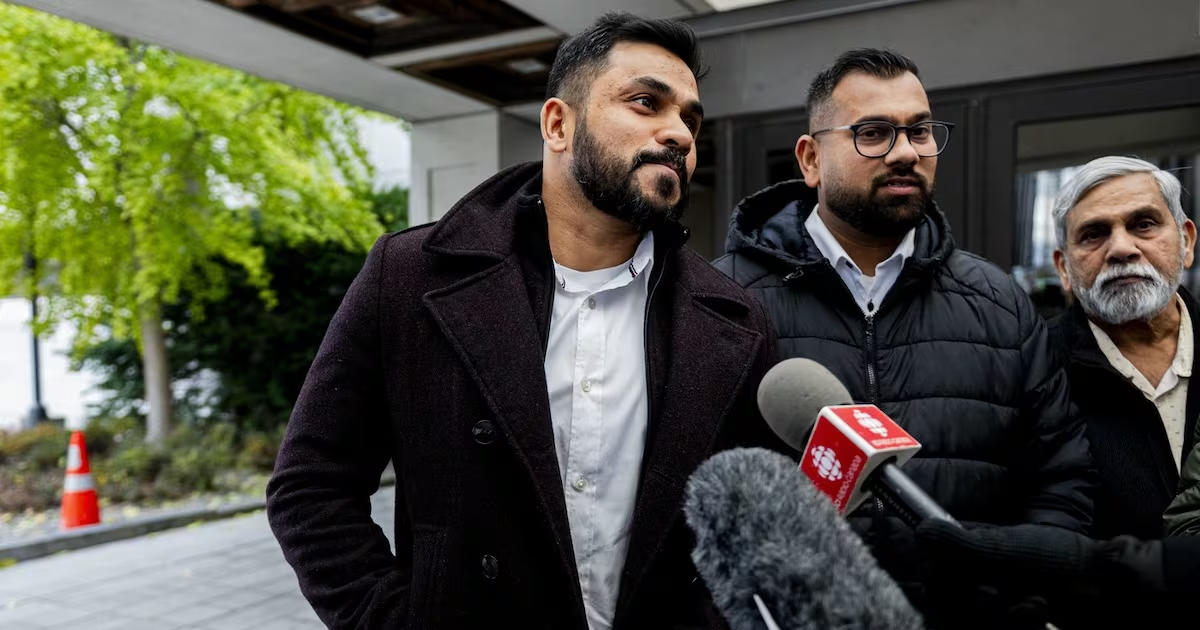
Canada has approved permanent resident status for the brother and father of Dhanushka Wickramasinghe, the Ottawa man whose wife and four children were killed in a mass stabbing in March 2024. The two family members travelled from Sri Lanka after the killings to support Wickramasinghe and had been seeking a more secure immigration status.
The approvals came this month, according to immigration lawyer Ronalee Carey, who represents the family. Carey said both men are now waiting for their permanent resident cards to be issued, and that the brother intends to sponsor his wife and daughter, who were previously refused visitor visas.
Case background and legal outcome
The killings occurred in March 2024 at a townhouse in Ottawa. Febrio De-Zoysa pleaded guilty and was sentenced to life in prison last fall. The victims included Darshani Ekanayake, her four children, one of whom was a two-month-old infant, and the family friend Gamini Amarakoon. Wickramasinghe survived the attack but was injured.
What the approvals mean for the family
Approval of permanent resident applications gives the brother and father the right to live and work in Canada and access public services available to permanent residents. Carey said the immediate priority is stabilizing their status while they complete the administrative step of receiving physical cards. Once cards arrive, the brother will move forward with sponsorship paperwork for his spouse and child.
Both applications were approved earlier this month and they are now waiting for their permanent resident cards,
Ronalee Carey, immigration lawyer
Family reunification plans and obstacles
The brother’s intention to sponsor his wife and daughter follows earlier refusals of visitor visas for those relatives. Visitor visa decisions are separate from sponsorship eligibility, and denials have previously prevented short-term family visits to Canada during the family’s crisis. Sponsorship for spouses and dependent children, once approved, provides a more durable route for reunification.
- Brother and father approved for permanent residence, awaiting cards
- Brother plans to sponsor wife and daughter after receiving PR documentation
- Visitor visa refusals had previously barred short-term visits
Why the status shift matters
Immigration status affects access to employment, health care and social supports, all of which can be important after a traumatic event. For Wickramasinghe and his extended family, permanent residency reduces uncertainty and creates a clearer legal pathway to bring close relatives to Canada.
Carey is handling the family’s immigration files. She confirmed the approvals to media, and said the next administrative step is the delivery of permanent resident cards. The family declined further comment through their legal representative.
Timeline and next steps
Key dates: the killings took place in March 2024; De-Zoysa was sentenced to life in prison last fall; the PR approvals for Wickramasinghe’s brother and father were granted earlier this month. The family now awaits permanent resident cards before submitting sponsorship applications for the brother’s spouse and child.
This report was first published by The Canadian Press on Jan. 19, 2026 and filed by Catherine Morrison. Torontoer spoke with the family’s lawyer for confirmation of immigration developments.
immigrationOttawafamily reunificationcrimelegal