Poilievre must broaden his pitch at the Calgary convention
At the Conservative convention, Pierre Poilievre needs a speech that speaks to delegates, caucus and the wider Canadian electorate if he wants to shore up leadership and broaden appeal.
Copy link
By Torontoer Staff
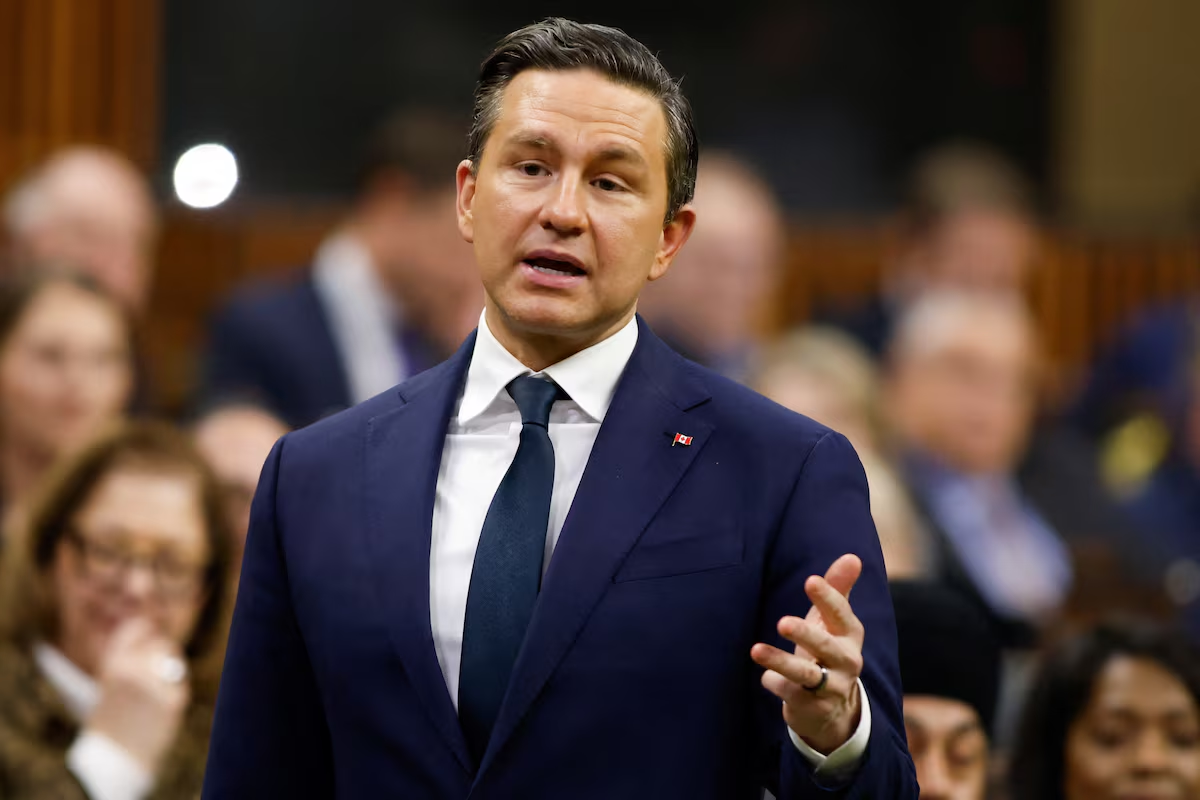
Pierre Poilievre will deliver his convention speech in Calgary on Friday, hours before delegates vote on his leadership. The moment matters for three audiences: party delegates, his own caucus, and Canadians who judge him on readiness to serve as prime minister.
Inside the hall he can safely satisfy the party base. Outside it, persistent polling shows Mark Carney beating him on the question of who Canadians prefer as prime minister. In between sits his caucus, where two MPs have already defected to the Liberals and others are rumoured to be undecided.
Three audiences, three tests
Convention speeches usually play to the room, emphasising the themes that energise delegates. For Poilievre that has meant rallies, slogans and a confrontational style that rallied the party during the last campaign. That approach won votes inside the party, but it has not translated into stronger personal standing with the broader public.
The second audience is the wider Canadian public. Polls show voters respond to perceptions of gravitas and competence, not only to policy positions. To narrow the gap against Carney, Poilievre needs to project a capacity for national leadership and practical solutions on everyday issues such as housing and inflation.
The third audience is his caucus. With defections already visible and the arithmetic in the House of Commons fragile, MPs looking for a leader who can both unite the party and win a general election will pay close attention to tone and delivery.
What the speech should show
A single speech will not erase long-standing perceptions, but it is a higher-profile opportunity than anything Mr. Poilievre has had since last year’s campaign. He can use the platform to demonstrate three things at once: seriousness, policy clarity, and a willingness to work across the House when needed.
- Seriousness: measured tone and concrete examples that convey readiness for national office.
- Policy clarity: specific measures on housing affordability, interprovincial trade barriers, and small business supports.
- Practicality: proposals that show how promises would be implemented, rather than slogans alone.
- Reassurance to caucus: a message that restores confidence among wavering MPs.
Recent party messaging and a reaction video to Mark Carney’s Davos speech signal the priorities Poilievre will emphasise. He has called for faster action on housing, deregulation in the energy sector and steps to reduce interprovincial trade barriers, along with strengthening military presence in the North.
Policy matters, but personality is the immediate test
There is no obvious ideological chasm within today’s Conservative Party. Policy positions on many issues are within reach of public opinion. The more immediate obstacle is Poilievre’s personal appeal. He built a strong base as a rally leader, but that style has not convinced a broader slice of voters that he can be prime minister.
Carney has solidified the Liberal base, but he hasn’t expanded it.
Andrew Coyne
That assessment points to the opportunity and the risk. If Poilievre combines clear policy proposals with a more restrained, statesmanlike delivery, he can chip away at the perception gap. If he defaults to the rhetoric that energises the base, the speech may reinforce existing views rather than alter them.
After the convention
The leadership review vote itself is unlikely to be close. Party organisers have worked to ensure friendly delegate turnout. The deeper challenge begins after the convention, when the party transitions from internal consolidation to campaigning for the national electorate. That will require sustained changes in messaging, staffing, and outreach beyond the party faithful.
For now, the speech is a signalling moment. It can reassure wavering MPs, show the media and voters that Poilievre can move beyond rally-stage confrontationalism, and give a clearer sense of what his priorities would look like in government. The test will be whether the delivery matches the policy content, and whether observers perceive a genuine shift in approach.
One address will not rebuild a leader’s national standing on its own, but it can be the start of a broader recalibration. For Poilievre, the task in Calgary is straightforward: broaden the pitch, show readiness, and begin convincing Canadians that he can do more than lead a movement.
Pierre PoilievreConservative PartyleadershipCalgaryCanadian politics