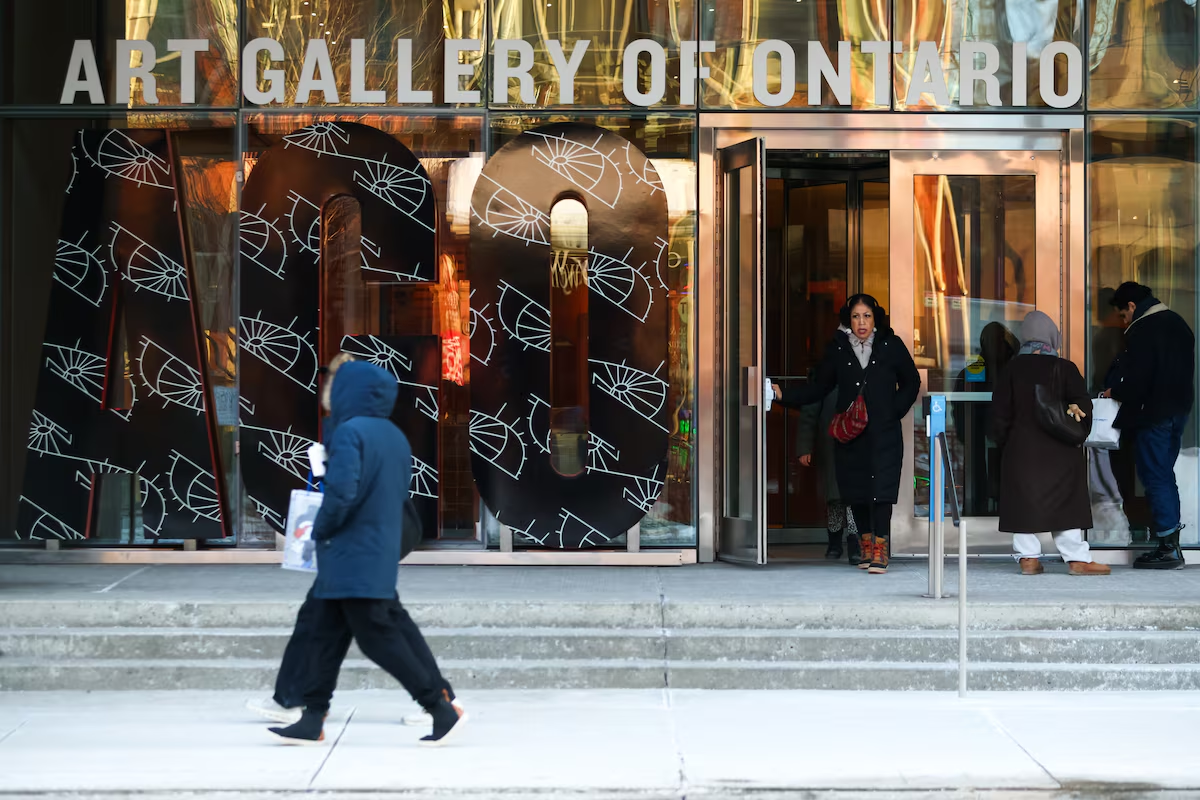
Pressure mounts on AGO after trustees block Nan Goldin acquisition
Nan Goldin and several Jewish groups are calling for trustee Judy Schulich to resign after the AGO’s committee voted against acquiring Stendhal Syndrome, prompting curator and committee resignations.
Copy link
By Torontoer Staff
Nan Goldin and a coalition of progressive Jewish organisations are calling for Art Gallery of Ontario trustee Judy Schulich to step down after internal documents showed she pushed to prevent the gallery from acquiring the artist’s video work, Stendhal Syndrome. The gallery’s modern and contemporary collections committee voted 11-9 in May against the acquisition, a decision that has prompted resignations and public backlash.
The vote followed a heated meeting in which some committee members alleged that Goldin’s public comments about Israel were offensive and antisemitic. The gallery says the discussion triggered a governance review and a broader reset of its acquisition processes.
What happened at the AGO
Documentation obtained by media outlets shows that Judy Schulich, a major donor and longtime trustee, prompted the conversation that led to the committee’s vote against acquiring Stendhal Syndrome. The work was intended to be co-acquired with the Vancouver Art Gallery and the Walker Art Center in Minneapolis, which later went ahead and added the piece to their collections.
John Zeppetelli, the AGO’s modern-and-contemporary curator who had advocated for the acquisition, resigned from his full-time role after the vote. Three volunteer committee members also stepped down, saying they could not support how the committee handled the discussion and the allegations directed at Goldin.
It cracks open the door so we can see how the board uses its wealth and power to protect their own interests and to try to control curatorial decisions.
Nan Goldin
Goldin’s activism and the contested comments
Goldin, 72, is widely known for work that blends documentation and activism, from the AIDS crisis to the opioid epidemic. In a 2024 speech in Berlin she expressed moral outrage at the deaths in Gaza and Lebanon during the 2023 Israel-Hamas war, remarks that have since been cited by critics who view her stance as crossing into antisemitism.
Goldin rejects that characterisation and argues that criticism of Israeli government actions is being conflated with antisemitism in order to silence dissent. She described the committee’s decision and the surrounding debate as harmful to public trust in cultural institutions.
Public response and demands for change
An open letter titled 'Not in Our Name: Jewish Groups Reject Donor Censorship and the Weaponization of Antisemitism' has been circulated by five organisations and collected nearly 200 signatures from artists, academics and community members. The signatories call on the AGO to recommit to curatorial independence and to remove donor influence from curatorial and collections decisions.
- Groups behind the open letter: United Jewish People’s Order Canada, Jews Say No To Genocide, IfNotNow Toronto, Independent Jewish Voices Toronto and the Jewish Faculty Network
- Key demands: recommit to curatorial independence, distinguish criticism of state violence from antisemitism, prevent donor influence on collections decisions
- Other institutions that acquired Stendhal Syndrome: Vancouver Art Gallery, Walker Art Center (Minneapolis)
The letter warns that using allegations of antisemitism to block speech and art undermines efforts to identify genuine hate and harms Jewish communities by emptying the term of meaning.
Our reset is to ensure that conversations remain focused on an artwork’s alignment to the AGO’s acquisition criteria, are healthy and productive, and welcome multiple perspectives.
Laura Quinn, AGO spokeswoman
Gallery response and next steps
AGO director and chief executive Stephan Jost acknowledged the controversy in statements to the press and described the institution as a public museum where pluralism is a reality. He said the gallery is conducting a governance review aimed at keeping acquisition discussions focused on criteria rather than politics.
Ms. Schulich has not responded to repeated requests for comment. The gallery has said it will pursue a 'reset' of practices to avoid donor influence on curatorial decisions and to ensure healthy, productive discussions moving forward.
Gallery governance experts have warned that introducing political viewpoints into acquisition decisions can erode public confidence in cultural institutions. The resignations and the open letter signal a larger debate about how museums balance donor relationships, curatorial independence and public trust.
For now, the episode has intensified scrutiny of the AGO’s board and renewed calls from artists and community groups for clearer boundaries between donors and curatorial processes. The gallery says the governance review is ongoing and that it will outline changes to its procedures.
Art Gallery of OntarioNan Goldinmuseum governancecuratorial independenceJudy Schulich