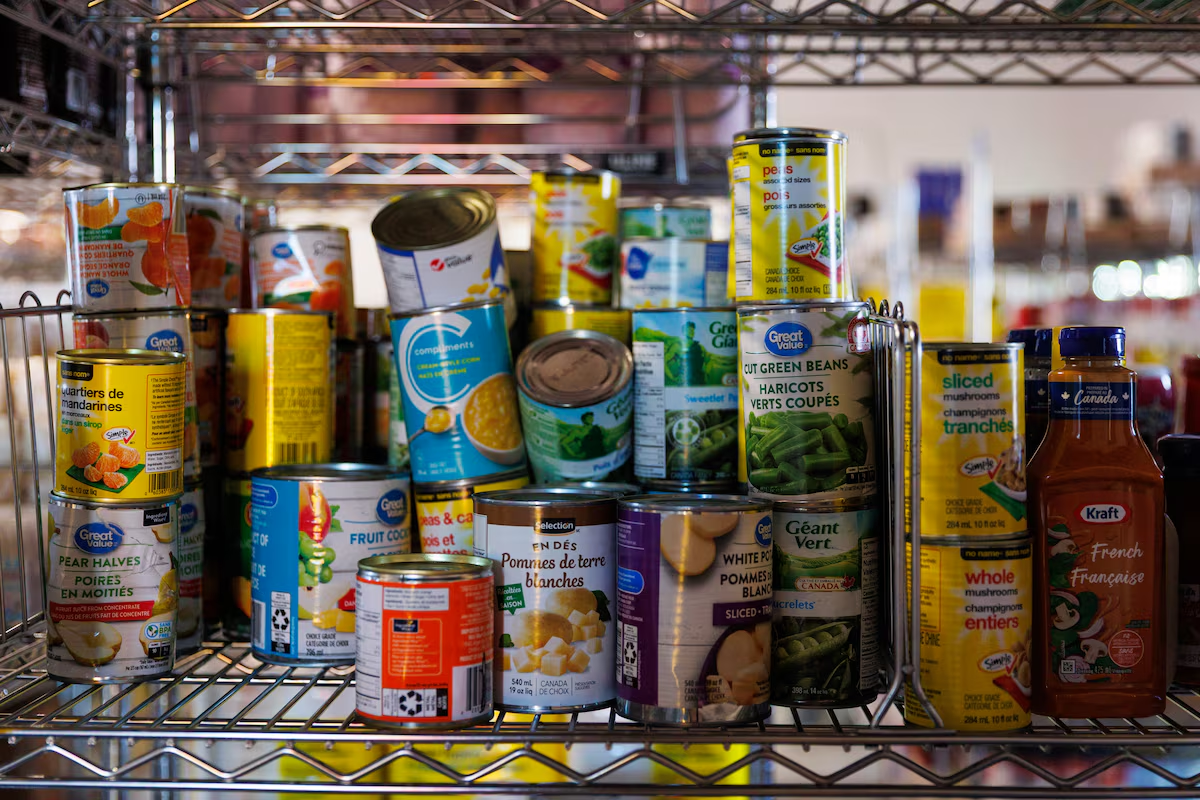
Food bank visits across Canada have risen to record levels, and experts say the trend is an early warning of growing homelessness risk. National and local data point to mounting food insecurity as incomes fail to keep pace with housing and living costs.
Food Banks Canada recorded a peak of 2.17 million visits in March of last year, and more than a quarter of Canadian households now experience some level of food insecurity. Advocacy groups and researchers link those numbers to a wider affordability crisis that is already driving more people into precarious housing situations.
Surge visible in small towns and big cities
The Renfrew & District Food Bank in eastern Ontario illustrates the scale of change in small communities. Before the pandemic the pantry served 180 to 250 clients a month. The number rose to about 400 during the pandemic and is now close to 600 in a town of roughly 8,500 people.
We’re seeing a huge number of working families, where mom and dad both have just about minimum wage jobs and they just can’t make things work.
Mike Wright, Renfrew & District Food Bank volunteer and operator
Staff extended evening hours in 2021 after clients began reporting difficulty attending during daytime hours. Operators report regular clients who are on social assistance or low-wage work, and former students among those seeking help.
To see former students come in … this was never their end goal.
Mike Wright
Food bank use as an early-warning indicator
Researchers argue food bank use is not only a symptom of immediate need, but a predictor of future homelessness. A University of Calgary School of Public Policy study tracked food bank use among people who later entered the city’s shelter system and found use increased steadily in the five years before homelessness.
What you see is that use of the food bank increases steadily over those five years until, finally, people fall into homelessness.
Ron Kneebone, study co-author
It’s not just correlation here. We’re observing how people are actually behaving.
Ron Kneebone
Feed Ontario, which represents roughly 1,200 food banks and community programs, made the connection bluntly in its recent report: 'When food bank visits go up, homelessness follows.' The group reported more than one million Ontarians used a food bank between April 2024 and March 2025.
Rural and northern communities are particularly strained
A report from the Association of Municipalities of Ontario identified 85,000 people who experienced homelessness in the province last year, including 12,800 in rural and northern areas. Those regions saw much larger year-over-year increases than urban centres: 31 per cent in rural areas and 37 per cent in northern communities, compared with a 7.8 per cent provincial rise.
Local services in smaller communities are often not equipped to absorb rapid increases in need, and limited access to mental health or addiction supports compounds pressures on shelters and food programs.
Income shortfalls drive food insecurity
Advocates frame the issue as an income crisis. When household income falls short, food is often the first budget item cut, leaving people unable to cover other essentials such as rent, prescriptions or utilities.
When people have limited income, food is often the first thing they cut from their budgets. If you’re showing up either in a statistic around food insecurity or in a food bank line, you’re going to be very, very precarious in other facets of your life.
Nick Saul, executive director, Right to Food
Local operators describe the arithmetic families and individuals face. One Renfrew County client told staff he receives $733 a month from Ontario Works and is left with $40 for food after fixed expenses are paid.
Policy responses and gaps
The federal government announced an increase to the GST credit on Jan. 26, relabelled the Canada Groceries and Essentials Benefit. Ottawa says the change will deliver additional support to about 12 million people for five years beginning in July.
Experts and service providers say one-time or short-term boosts will not fully address long-term housing and income instability. They call for coordinated policy action, including income supports that track local costs, more affordable housing supply, and strengthened mental health and addiction services.
- Record-high food bank visits: 2.17 million visits in March last year, according to Food Banks Canada
- More than 25% of Canadian households report some level of food insecurity
- Ontario: 85,000 people experienced homelessness last year, with sharp rises in rural and northern areas
- Federal boost to the GST credit, branded the Canada Groceries and Essentials Benefit, starts in July and affects about 12 million people
Food banks continue to meet immediate need, but operators and researchers stress they are not a long-term solution. Rising use signals deeper failures in income and housing systems that will require sustained policy responses to prevent more Canadians from losing their homes.