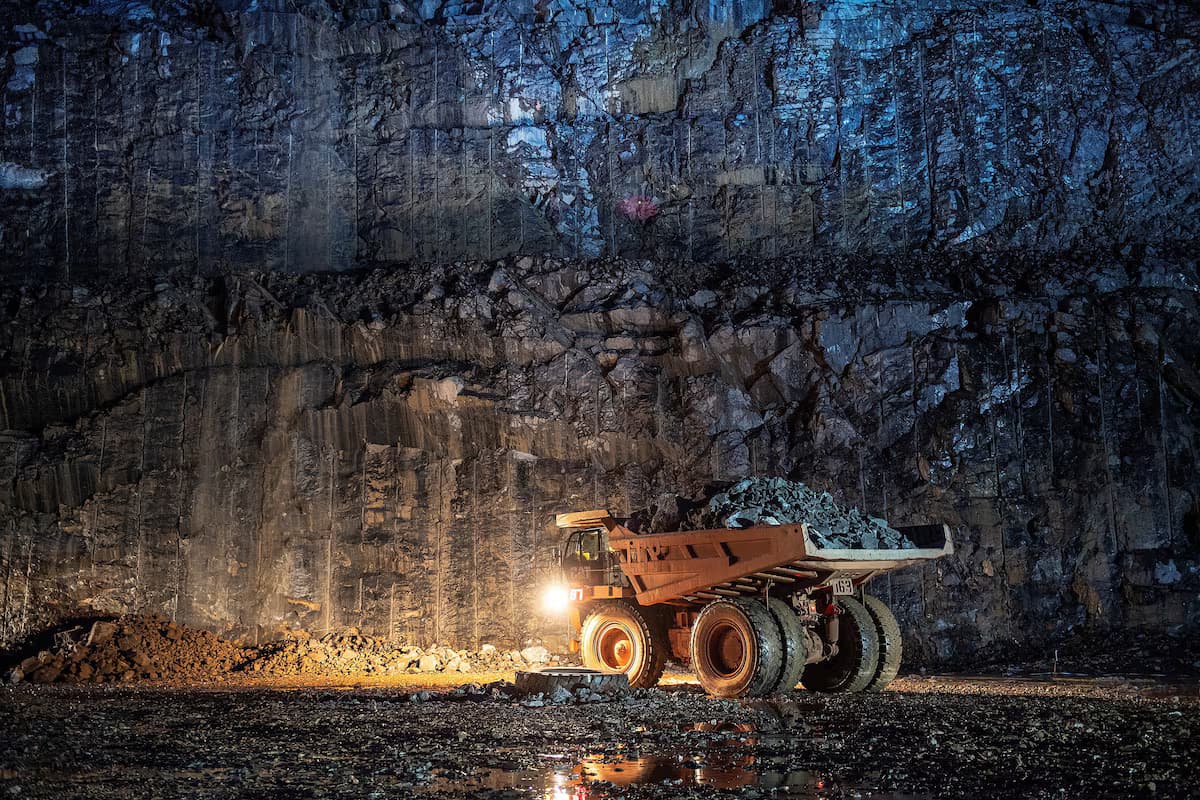
A mineral deposit in east central Saskatchewan contains enough alumina to be a "possible game changer" for North American aluminium supply chains, Canadian Energy Metals Corp. said after releasing a Preliminary Economic Assessment, or PEA.
The discovery, called the Thor Project, is notable for its scale. The PEA outlines resource estimates, an initial production profile and a financial model that company executives say support further engineering and commercial work.
What the PEA shows
CEM reported a measured and indicated mineral resource of 49.5 billion tonnes, containing an estimated 6.8 billion tonnes of alumina, plus an inferred resource of 86.6 billion tonnes. The PEA models a surface mining and processing operation with an average ore throughput of 16.5 million tonnes per year, producing about 1.8 million tonnes of alumina annually over a 25-year mine life.
- Measured and indicated resource: 49.5 billion tonnes
- Alumina contained in measured and indicated: 6.8 billion tonnes
- Inferred resource: 86.6 billion tonnes
- Annual ore throughput modelled: 16.5 million tonnes
- Annual alumina production modelled: 1.8 million tonnes
- Project life modelled: 25 years
Economics and company plans
The PEA includes a financial model that assumes initial capital expenditures of US$6.3 billion and operating costs of US$1.6 billion. Based on those assumptions, the after-tax internal rate of return is modelled at 72 per cent and the net present value of cash flows is US$72.3 billion, discounted at 10 per cent.
CEM said the next step is engineering for a demonstration facility while advancing the Thor Project toward commercialization. The company framed Thor as a potential domestic source of alumina, the feedstock used to make aluminium, and said it could support downstream processing and value-added industries in Saskatchewan and across North America.
This PEA confirms that the Thor Project is a possible game changer for North America’s aluminium supply chain. We have established a world-leading, secure source of alumina right here in Saskatchewan, and our next focus is to engineer a demonstration facility while moving Thor towards commercialization.
Christopher Hopkins, president and CEO, Canadian Energy Metals Corp.
Why this matters
Alumina is the intermediate product refined from ore and then smelted into aluminium, a metal used widely in transportation, power transmission and energy storage. Having a large domestic alumina source could reduce reliance on overseas supply chains and support regional manufacturing that uses aluminium as feedstock.
CEM’s news release highlighted potential economic benefits, including high-paying jobs, royalty and tax revenues, and regional growth during construction and operations. The company framed Thor as the start of a new processing and value-added industry for Saskatchewan and North America.
When you see you have a resource find of this quantity and quality and the geology of it in the space that it’s in, it becomes even more attractive for our province and again the world. I’d say we most certainly as a province are on track to achieve that target of expanding the number of minerals that are available in Saskatchewan.
Scott Moe, Premier of Saskatchewan
What comes next
The PEA is an early-stage study, and it does not confirm that the project will be developed. CEM will need to complete more detailed engineering, permitting, environmental assessments and community and Indigenous consultations before any construction can begin. Financing and market conditions will also affect timing and scope.
CEM has said it will pursue a demonstration facility as a next step. That work will clarify capital and operating requirements and provide a basis for more advanced feasibility studies.
A large find, and a long road
The scale of the Thor estimates marks it as one of the larger alumina discoveries in recent years, but large resource figures do not guarantee rapid development. The company’s projections assume substantial investment and favourable operating economics. Stakeholders and regulators will now look to more detailed studies and consultation processes to evaluate environmental, social and economic trade-offs.
For now, the PEA places Thor on the map as a potentially significant North American source of alumina, while leaving many technical and regulatory steps ahead before it can move from assessment to production.