Silver tops US$100 an ounce as investor and industrial demand pushes metals higher
Silver recently cleared US$100 an ounce for the first time as retail buying, industrial use and tight supply lift precious metals alongside gold.
Copy link
By Torontoer Staff
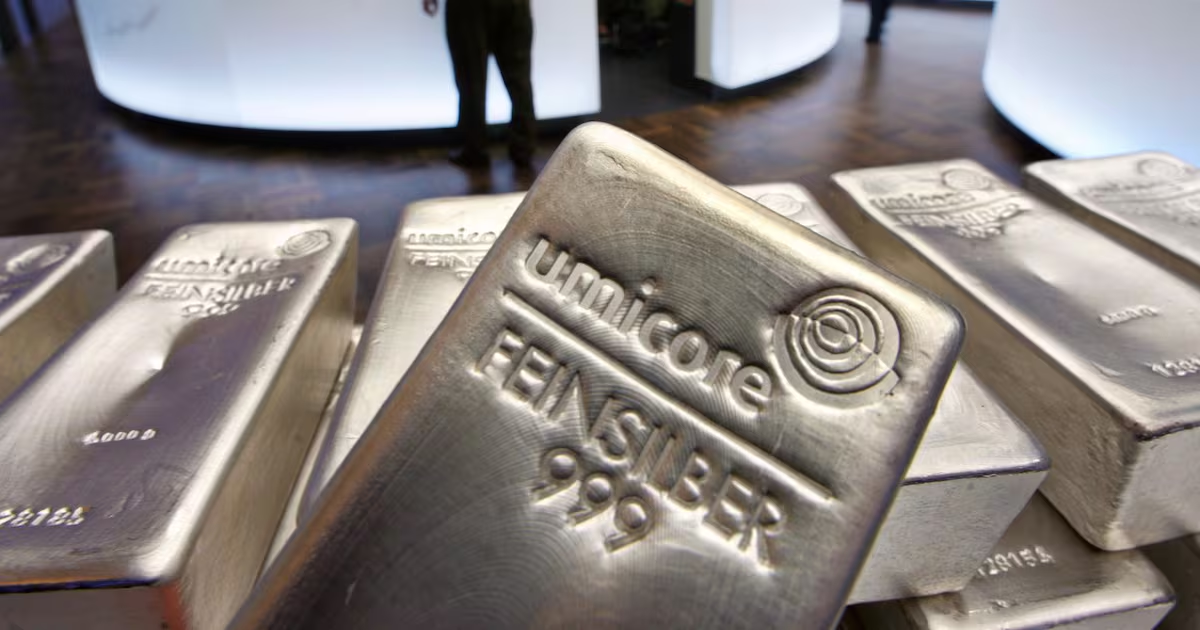
Silver prices breached US$100 per ounce for the first time recently, joining gold’s dramatic climb and contributing to gains on the Toronto Stock Exchange. The move reflects a mix of retail investor interest and growing industrial demand, especially for clean energy and automotive applications.
Market participants say two forces are at work: silver’s role as a partial safe haven and its status as an industrial metal, used in everything from solar panels to electric vehicle components. That dual character is changing how investors view the metal, and how prices respond to shifts in supply and the currency market.
What pushed silver to new highs
Retail demand has been a dominant factor since April of last year, says Dennis da Silva, senior portfolio manager at Middlefield. He points to strong purchases of physical silver and exchange traded funds as the primary driver behind the recent surge in prices.
Since April of last year, the big move has been driven by strong retail demand or participation, and that’s both in physical and ETF demand. I would say that’s been the biggest driver.
Dennis da Silva, Middlefield
Unlike gold, which is largely non-consumable, around 55 per cent of silver demand stems from industrial uses. That includes photovoltaic cells for solar energy and electrical contacts in vehicles, sectors that have expanded in recent years and are expected to keep growing.
Supply constraints and a softer U.S. dollar
Tight supply is adding upward pressure on both gold and silver. Bipan Rai, head of ETF and alternatives strategy at BMO Global Asset Management, says global production has failed to match rising demand, creating a structural deficit that shows up in prices.
We are in a situation now where in terms of global supply, we are in a deep deficit, not just for gold, but also for silver as well.
Bipan Rai, BMO Global Asset Management
The U.S. dollar’s weakness has also contributed. A softer dollar raises the appeal of dollar-priced commodities for holders of other currencies, and geopolitical tensions and trade policy shifts over the past year have weighed on the greenback.
Industrial demand and emerging technologies
Beyond traditional uses, silver may benefit from technological trends. Rai notes potential demand from cooling systems in data centres and artificial intelligence hardware, where silver’s thermal and electrical properties are useful.
- Solar panels: silver is a key conductor in photovoltaic cells
- Electric vehicles: used in electrical contacts and wiring
- Electronics and AI hardware: thermal management and conductivity
- Photography and chemical uses: smaller today but still relevant
Those industrial drivers make silver different from gold. Gold remains the primary safe haven for central banks and investors during geopolitical stress, and silver often follows gold’s moves while also reacting to industrial cycles.
Risks and the outlook
Analysts caution that some of the recent gains reflect elevated retail speculation, which may not be sustainable. Da Silva said retail enthusiasm can create sharp price spikes that reverse when buying subsides.
There’s just this surge in retail demand, which we know is not something that’s sustainable. When that dissipates or returns back to normal levels, you’re left with, ‘What’s the industrial demand like?’
Dennis da Silva, Middlefield
Da Silva expects silver to retreat from current peaks over the next year or two, toward a range around US$75 to US$80 an ounce, reflecting what he sees as the underlying industrial demand once speculative buying cools.
Other factors that could alter the trajectory include central bank policy choices, stronger-than-expected mine output, and shifts in the U.S. dollar. Short-term price moves have already shown sensitivity to political developments and monetary policy announcements.
What this means for investors and consumers
Higher precious metals prices affect a range of market participants. Investors holding physical metals or ETFs have seen substantial gains in recent years. At the same time, industries that rely on silver face higher input costs, which could influence supply chains for electronics and renewable energy components.
For Canadians watching the market, movements in the U.S. dollar and global supply dynamics are key variables. The recent run higher reflects a mixture of durable industrial demand and speculative retail interest, a combination that often produces volatility.
Precious metals fell briefly after an announcement about the U.S. Federal Reserve leadership, showing how sensitive prices remain to policy signals. Still, the larger trend over the past two years has been a sharp appreciation in both gold and silver.
Investors and industry participants should weigh the dual role of silver when considering exposure: it can behave like a commodity tied to economic activity and like a safe haven tied to monetary and geopolitical developments.
Silver’s record levels are a reminder that evolving demand patterns, supply constraints and currency moves can reshape commodity markets quickly. How long this rally lasts will depend on whether retail enthusiasm cools and how industrial demand evolves.
silverprecious metalsmarketscommoditiesgold