Slovakia national security adviser resigns after Epstein files show messages about women
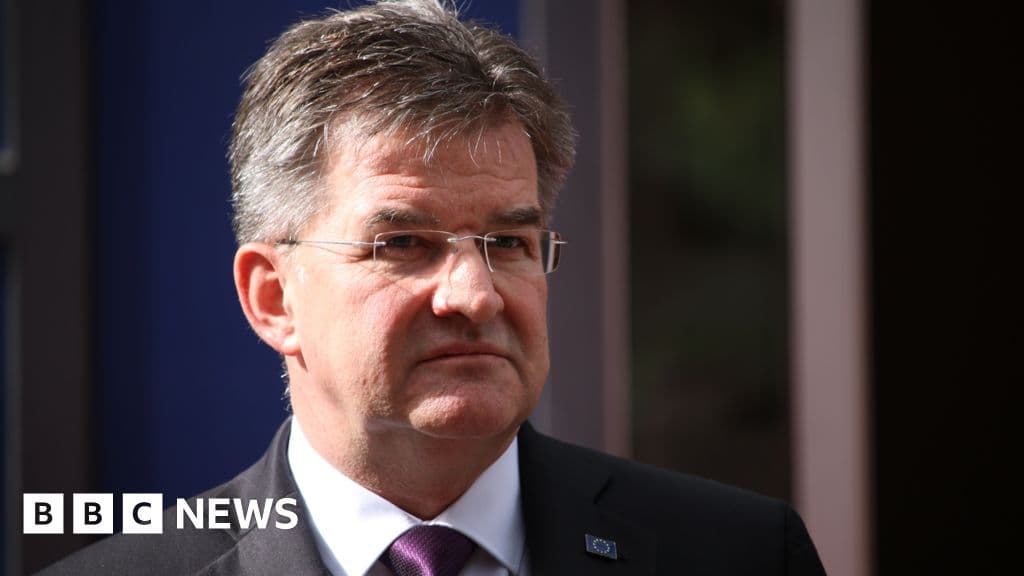
Miroslav Lajčák resigned after US Department of Justice documents showed him exchanging messages about women and diplomacy with Jeffrey Epstein. He denied wrongdoing but stepped down to limit political fallout.
Copy link
By Torontoer Staff
Miroslav Lajčák, the national security adviser to Slovakia's prime minister, has resigned after documents released by the US Department of Justice showed he exchanged messages about women and diplomacy with the late financier and sex offender Jeffrey Epstein. Lajčák denied any wrongdoing, and told Slovak media he was stepping down to avoid political damage to Prime Minister Robert Fico.
Prime Minister Fico said he had accepted the resignation while praising Lajčák's diplomatic experience. The resignation follows the release of roughly three million files connected to Epstein, which contain messages and other material involving numerous public figures.
What the released messages show
The publicly available files include a text exchange dated October 2018, when Lajčák was serving as Slovakia's foreign minister. In those messages, the two men banter about women and a planned meeting with Russian Foreign Minister Sergei Lavrov. The exchanges include propositions and references to young women that have prompted public concern.
You get the tee shirt. Then you get the girls.
message from Jeffrey Epstein in released files
In the same exchange, Epstein tells Lajčák that he can 'have them both' and mentions 'their sisters' and their ages. Lajčák replies with remarks such as 'Don't be mean' and a reference to not being known 'in action.' The messages also show Epstein asking Lajčák to request a Lavrov-themed t-shirt, linking the social and diplomatic content of the chat.
Timeline and immediate fallout
- October 2018: Messages between Lajčák and Epstein were exchanged while Lajčák was foreign minister.
- Late January 2026: The US Department of Justice releases roughly three million files related to Jeffrey Epstein.
- Shortly after the release: Lajčák publicly denied discussing women with Epstein, then announced his resignation to limit political consequences for the government.
- Prime Minister Robert Fico accepted the resignation and described Lajčák as an experienced diplomat.
Political reaction in Slovakia
Fico defended Lajčák and criticised the domestic response. He described the public outrage as an attack on his government and on himself. Fico called Lajčák 'an incredible source of experience in diplomacy and foreign policy' and said the criticism was hypocritical.
I have not seen so much hypocrisy in his criticism for a long time, and from all sides.
Prime Minister Robert Fico
Opposition politicians and civil society figures pressed for clear answers after the files became public. While some demanded investigations or more transparency, others noted that the documents do not, by themselves, establish criminal conduct by those featured.
Background on Lajčák and the wider context
Miroslav Lajčák has served in multiple Slovak governments and held senior diplomatic roles, including as foreign minister and as an EU special representative for the western Balkans. He worked under three administrations led by Robert Fico and had a long career in international diplomacy.
The Department of Justice release has contained a wide range of material. Among the documents and images made public are photographs involving other high-profile figures. US authorities and journalists compiling the files have said inclusion in the release does not constitute proof of illegal activity.
What comes next
Slovak officials have not named an immediate successor to Lajčák in the national security role. Political analysts say the episode will complicate Fico's efforts to stabilise his coalition and manage foreign-policy priorities, particularly with sensitive relations involving Russia and the EU.
Investigations or formal inquiries would depend on Slovak legal authorities and any foreign counterparts with jurisdiction over actions alleged in the files. For now, the main consequence is reputational: Lajčák's resignation removes him from a high-profile advisory post while questions continue to circulate about past contacts with Epstein.
Lajčák's departure illustrates the broader challenge public figures face when implicated in material released from high-profile investigations. The documents have prompted renewed scrutiny of networks around Epstein, and triggered political reverberations far beyond the United States.
SlovakiaMiroslav LajčákJeffrey EpsteinRobert Ficodiplomacy