Supreme Court hears challenge to random police traffic stops after Quebec rulings on racial profiling
The Supreme Court is weighing whether police can legally make random traffic stops, after Quebec courts found the practice leads to racial profiling in stops of Black drivers.
Copy link
By Torontoer Staff
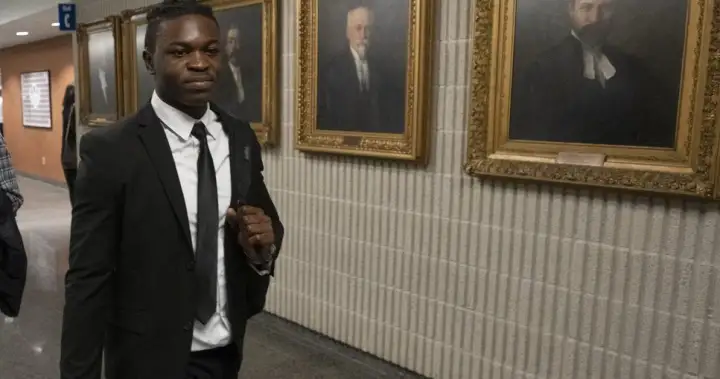
The Supreme Court of Canada began hearings on Monday to decide whether police may constitutionally make random traffic stops, a practice Quebec courts have found contributes to racial profiling. The case centres on Joseph-Christopher Luamba, a Montreal man of Haitian descent who says he was repeatedly stopped by officers beginning in 2019, shortly after he obtained his licence.
None of the stops against Luamba resulted in a ticket. He and the Canadian Civil Liberties Association challenged the statutory power that allows drivers to be intercepted without reasonable suspicion. Quebec Superior Court Justice Michel Yergeau ruled for Luamba in October 2022, and the Quebec Court of Appeal upheld that decision in 2024.
What the lower courts decided
Justice Yergeau concluded that racial profiling exists and heavily affects Black people in Quebec. He found that the provincial Highway Safety Code provision authorising random checks violated constitutional rights and should be set aside. The Court of Appeal agreed, rejecting the longstanding precedent that had previously allowed such stops.
Arguments presented to the Supreme Court
Lawyers for the Quebec government urged the high court to reject the lower-court rulings. They argued that random interception powers are a necessary tool for road safety enforcement and have a deterrent effect. Quebec counsel Michel Déom said routine verification encourages compliance because drivers know they can be stopped at any time.
There is a deterrent factor in routine verification. If a person knows they can be intercepted at any time to verify their driver’s licence, that has an effect.
Michel Déom, lawyer for the Quebec government
Déom acknowledged that some officers engage in illegal interceptions motivated by prejudice, but he argued that those abuses should not erase a lawful enforcement power. He also told the court that structured operations such as drunk driving checkpoints are not sufficient in urban areas because they are easy to avoid, and they can be impractical in rural settings.
Luamba’s lawyer and the CCLA put the opposite case: random stops are not applied randomly and they disproportionately target Black drivers. Mike Siméon told the Supreme Court that the power to intercept is used in an arbitrary and non-random way against a segment of the population.
The power of random interception is applied in a non-random way. Firstly, so it’s not random, it’s applied arbitrarily to a segment of the population.
Mike Siméon, lawyer for Joseph-Christopher Luamba
Lawyer Lex Gill, for the Canadian Civil Liberties Association, argued the 1990 decision that created the modern rule has removed meaningful limits on police discretion. She said the unconstrained nature of the power, along with low visibility and lack of review, gives rise to discriminatory effects under Section 15 of the Charter, which guarantees equality rights.
The evidence is clear that it’s the very nature of the power, unconstrained, low visibility, discretionary, unreviewable, standardless, that gives rise to the discriminatory effects under Section 15.
Lex Gill, lawyer for the Canadian Civil Liberties Association
Legal background: R. v. Ladouceur and Yergeau’s ruling
The issue dates to the Supreme Court’s 1990 decision in R. v. Ladouceur, which upheld random stops as a justified intrusion on liberty because they are necessary to determine licence status, seatbelt use and impairment. Justice Yergeau rejected that framework in 2022, saying the power should be declared obsolete and that the relevant provision of Quebec’s Highway Safety Code could not stand.
What would change if the Supreme Court upholds the appeal court
If the Supreme Court affirms the Quebec decisions, provinces and police forces would likely need to alter how they conduct road safety enforcement. Defence counsel at the hearing said officers can continue to use targeted road safety programs, set up checkpoints, and carry out investigations grounded in reasonable suspicion.
- Designated road safety programs and checkpoints would remain lawful
- Officers could still stop drivers when they have reasonable suspicion or when an infraction occurs
- Unrestricted, discretionary stops without objective standards would be curtailed or require new statutory limits
Quebec has acknowledged the issue of racial profiling and said it has measures in place to counter it. Déom told the court that improper conduct by individual officers should be addressed through training, policy and discipline rather than by removing a lawful tool entirely.
Practical considerations and next steps
The hearings are expected to continue on Tuesday. A Supreme Court decision could have wide implications beyond Quebec, affecting police powers in other provinces and shaping national standards for balancing road safety and equality rights. Legal experts say a ruling that limits random stops would require legislatures and police services to refine how they enforce traffic laws without relying on unconstrained discretionary stops.
The case raises competing public policy concerns: road safety enforcement and the need to protect individuals from discriminatory policing. The Supreme Court’s ruling will clarify whether the balance struck in Ladouceur remains appropriate in the context of evidence about profiling, or whether legal constraints must be reinstated to prevent systemic rights violations.
This report was adapted from a Canadian Press dispatch first published Jan. 19, 2026. The Supreme Court will deliver a decision at a later date.
policingSupreme Courtracial profilingtraffic stopscivil liberties