Teen says he was strip searched four times in less than 48 hours at Roy McMurtry Youth Centre
An Etobicoke youth says he was strip searched repeatedly at a Brampton youth jail in September 2024. The account is part of a pending class action and prompted regulatory changes.
Copy link
By Torontoer Staff
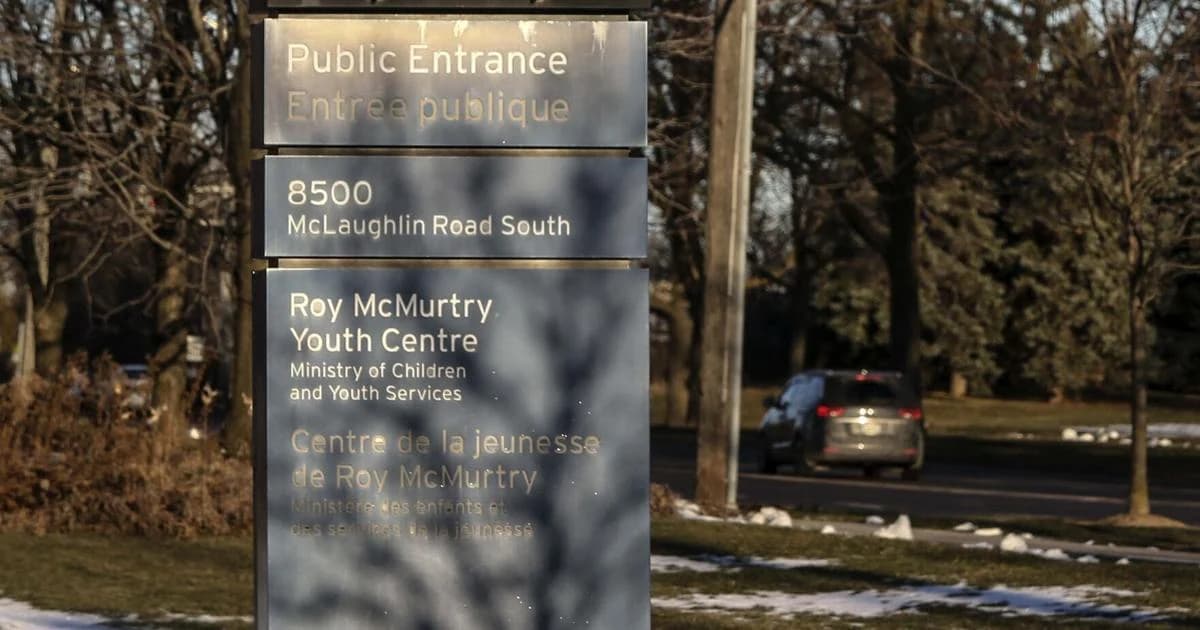
An Etobicoke teen says he was strip searched four times in under 48 hours while held at the Roy McMurtry Youth Centre in Brampton after a September 2024 arrest. The account, given in an affidavit filed this week, is part of a pending class action against the Ontario government over routine strip searches of young people in custody.
The youth, who was 17 at the time and cannot be identified under the Youth Criminal Justice Act, says the searches occurred on Sept. 23 and Sept. 25, first on arrival at the facility, then before he was transported to court the next morning, again after he returned from court, and once more the following day before a second court appearance. He was released on bail the second day.
What the youth says happened
In the affidavit, the teen describes being ordered to remove all clothing, and subjected to visual inspections that included being told to lift his testicles and bend over while officers inspected his rectum. He said he felt humiliated and that staff gave him no option to refuse.
No one should have to go through what I went through at the Roy. The process of routinely strip-searching young people on a daily basis is truly unconstitutional and un-Canadian. This treatment must come to an end for all young people who are presently incarcerated and or, detained in youth facilities.
Affidavit of the youth
The affidavit attaches facility reports and staff testimony that, according to the filing, corroborate the teen's description. Those materials are part of the evidence in a proposed class action seeking changes to how and when young people are searched in custody.
Timeline of searches
- Around 8 p.m. on Sept. 23, strip searched on arrival at Roy McMurtry Youth Centre.
- Early morning on Sept. 24, strip searched before being taken to court.
- Hours later on Sept. 24, strip searched after returning from court.
- Sept. 25, strip searched again before another court appearance; released on bail that day.
Legal and policy context
The Crown has conceded in the teen's criminal case that his Charter rights were violated by being made to strip completely naked, though the Crown has not sought to withdraw the underlying charges. A recent judicial ruling cited in the court record criticised routine strip searches where no prior suspicion exists, saying the violation extends to 'the routine performance of strip searches' when no grounds for belief are required.
Ontario's Ministry of Children, Community and Social Services updated regulations to prohibit youth being completely naked during searches, while still permitting strip searches under specified circumstances. The rules allow searches without specific suspicion on admission and when a youth re-enters a facility after being out of sight, if the head of the facility authorizes the search and a less intrusive method would not be effective or operationally feasible.
The updated regulations establish clear conditions and supporting greater oversight of searches of young persons.
Ministry of Children, Community and Social Services
The ministry is piloting body scanners at two facilities, including Roy McMurtry. Nevertheless, the Roy's new policy, updated in July 2025 to align with the regulations, still contains a provision for 'routine strip searches.'
What remains unresolved
The allegations in the affidavit have not yet been tested in civil court. The class action seeks broader reform to how searches are authorised and carried out in youth custody. Advocates and legal observers say the case will test the balance between facility security and the rights and dignity of young people in detention.
The teen's affidavit closes by calling for an end to routine strip searches of young people in custody. For now, provincial rules limit some practices, but allow searches in defined situations and leave room for facility discretion. The next steps will depend on court rulings in the class action and any further policy changes the ministry elects to make.
youth justiceRoy McMurtry Youth Centrestrip searchOntarioclass action