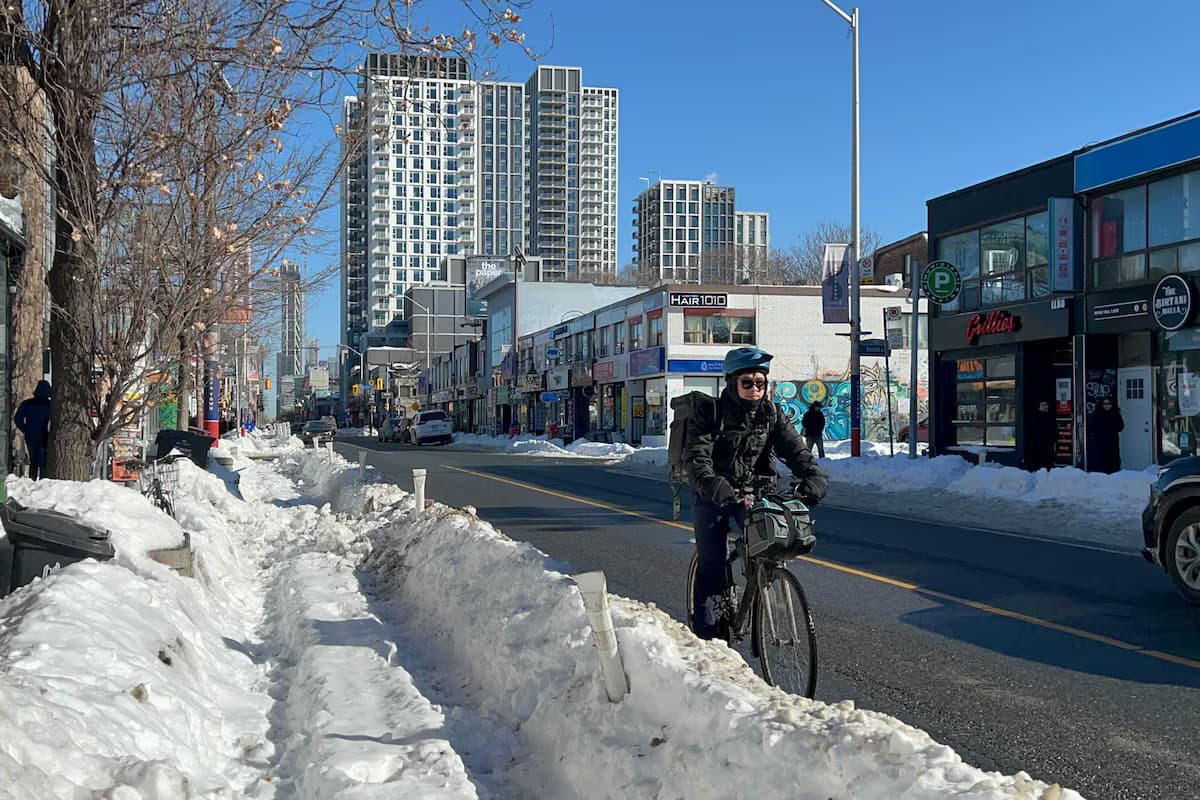
Toronto commuter walks eight kilometres after TTC service collapses in record snowstorm
A Toronto woman walked about eight kilometres and spent two hours getting home after streetcars and subways stopped during Sunday’s record snowstorm.
Copy link
By Torontoer Staff
A Toronto commuter who set out for a routine trip after a shift on Jan. 25 ended up walking roughly eight kilometres and spending two hours getting home, after streetcars, subways and promised shuttle buses failed to move her north through the city during a record snowstorm.
The woman, who asked to be identified only as Leya, says the experience highlights gaps in the city and Toronto Transit Commission response as heavy snowfall shut down lines and stranded riders across the network.
How the commute collapsed
Leya was finishing a full shift near Bathurst and College around 7 p.m. She planned to take a northbound streetcar to Bathurst Station, transfer to Line 2 and then to Line 1 for the final leg to Lawrence Station. Under normal conditions the trip takes about 37 minutes, according to the TTC trip planner.
After waiting at a stop where the TTC app repeatedly showed a streetcar arriving 'in six minutes' for an extended period, she decided to walk north to Bathurst Station. Sidewalks were largely unploughed, which forced her off the sidewalks at times and into the street to keep moving.
Some of the sidewalks were so bad, I had to go on to the street, which, you know, on Bathurst is a little scary.
Leya
When she reached Bathurst Station she found the subway shut down. Shuttle buses were reportedly being deployed, but she did not see any. Rather than wait outside in the storm for an unknown period, she kept walking east to Bloor Station, about four kilometres from Bathurst.
At Bloor Station she encountered large crowds who said they had been waiting as long as an hour for shuttle buses that had not arrived. With northbound subway service still interrupted, Leya continued on foot up Yonge Street to Eglinton, then managed to board a northbound train from Eglinton that took her one stop to Lawrence.
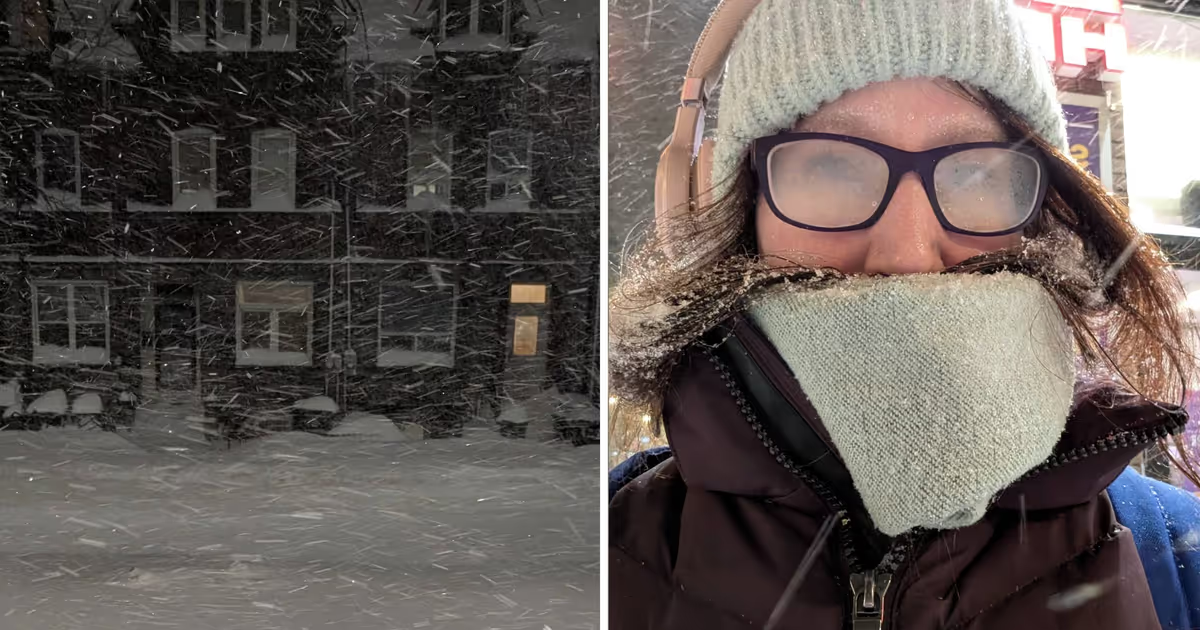
She describes the route as slippery, uneven and extremely cold despite layers of winter clothing. The trek took close to two hours. She says her face tingled with frostbite when she finally got inside.
Where the TTC and city response fell short
The transit agency issued statements praising its response to the storm. Riders on the ground described a different picture: stalled vehicles, limited visible shuttle service and crowded stations with people waiting in the cold.
Leya and other commuters argue the TTC and the city had advance warning of the storm and should have staged buses and activated contingency plans earlier, instead of leaving riders to navigate unploughed sidewalks and inconsistent service.
The TTC thinks that they're doing us a service, instead of realizing that they are in service to us. They're really falling down on the job.
Leya
The TTC blamed extreme conditions for service interruptions, and said crews were working to restore service and keep routes moving. The agency also pointed to the scale of the storm and prioritized safety when making decisions about suspending service.
Practical takeaways for commuters
Leya’s walk underlines how quickly a routine commute can become a long, exposed journey when transit falters and municipal snow clearing lags. For riders, small preparations can make a significant difference when service becomes unreliable.
- Dress in layers, including a windproof outer layer and insulated boots, and protect exposed skin to reduce frostbite risk.
- Carry a portable phone charger and check multiple sources for service updates, including the TTC website and local news.
- Plan alternative routes in advance, including safe walking corridors and accessible stations.
- Allow extra travel time during severe weather and consider delaying non-essential trips until services stabilise.
- Report unploughed sidewalks and blocked stations to the city to help prioritise clearing efforts.
What comes next
More snow is expected this week, though forecasts suggest much lighter amounts than Sunday’s record storm. City and TTC officials say they will refine their response plans after reviewing system performance, but commuters say they want clearer communication and more visible contingency service when conditions deteriorate.
For Leya, the episode was a reminder that personal preparedness matters when public systems are under strain, and that reliance on a single mode of transit can leave riders stranded when networks freeze up.
TTCsnowstormcommuteTorontotransit