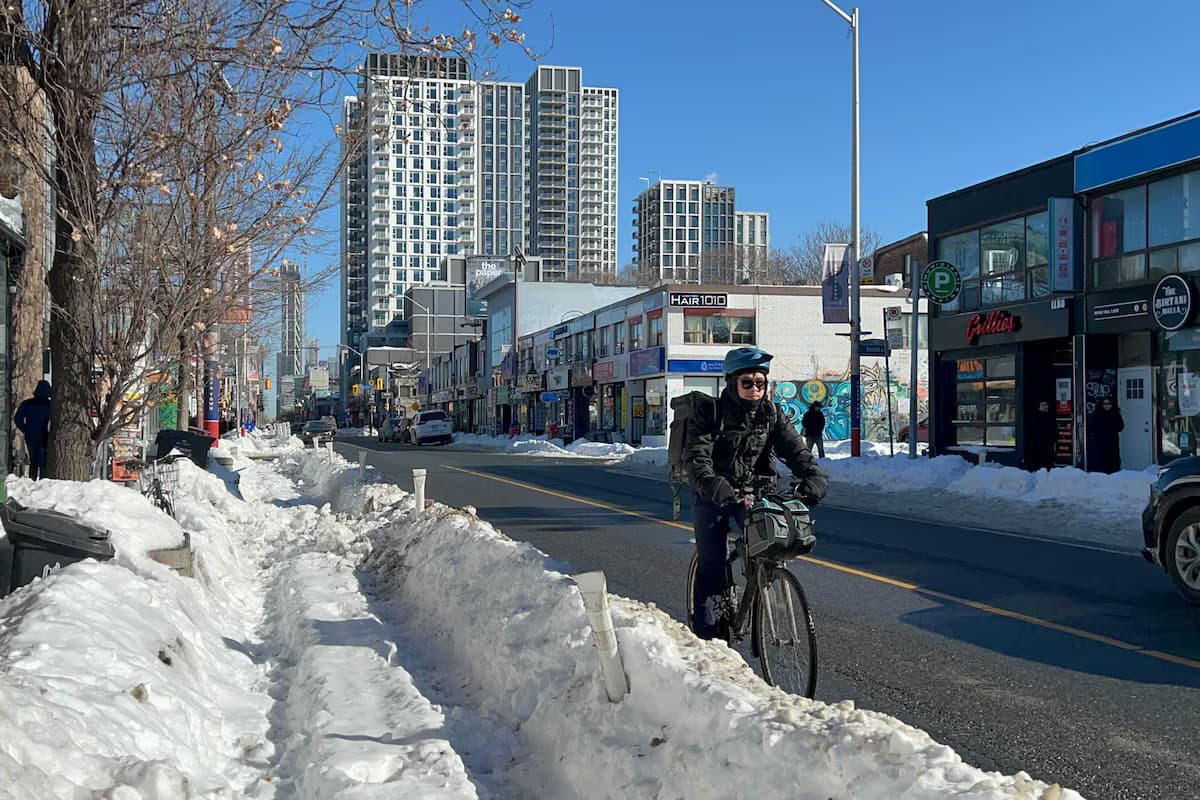
A week after Toronto’s record storm, many protected and painted bike lanes remain clogged with snow and ice, forcing cyclists into vehicle traffic and raising safety concerns. Delivery workers, volunteer couriers and everyday riders say the blocked lanes have made streets more dangerous and unpredictable.
Uber Eats courier Karan Singh said most bike lanes are unrideable, so he has been cycling in traffic to make deliveries. He described the experience as "very scary," and said drivers often honk or pass unsafely when sharing the road.
Riders riding in traffic
Cyclists across major corridors, including Bloor Street, University Avenue and College Street, report packed snowbanks and icy surfaces that block dedicated bike lanes. For many riders, especially those relying on cycling for work, staying off the road is not an option.
I'm taking the lane because there's not enough space for people to pass me. It's scary for me and I've been biking since I was a kid.
David Shellnutt, Toronto Bike Brigade founding member
Shellnutt, a lawyer who often represents injured cyclists and a regular volunteer with the Toronto Bike Brigade, said several volunteers have paused food deliveries because they do not feel safe riding in traffic while bike lanes remain piled with snow.
They’ve taken away our safe infrastructure, in effect, by not clearing it.
David Shellnutt
Advocates call for a clear snow‑clearing plan
Cycle Toronto and other advocacy groups are pressing the city for a published timeline and clear priorities for clearing bikeways. Advocates say patience ran out after several days with little clarity on when main routes would be restored.
I think there's been a lot of patience and a lot of understanding that this was a major snow event. But I think at this point folks are starting to wonder what's the plan?
Michael Longfield, Cycle Toronto
City response and operational limits
The City of Toronto said last week that clearing bikeways and sidewalks would take several days because of the sheer volume of snow. City staff reported about 260 calls to 311 regarding bike lane maintenance in the past week, representing 1.6 per cent of winter maintenance calls.
Crews are removing snow from bike lanes, the city said, but officials could not provide a firm timeline for clearing all 956 kilometres of bikeways. The municipality noted that lanes can become re-covered after being cleared because of passing traffic, blowing snow or adjacent road ploughing operations.
Crews often need to return multiple times to maintain safe conditions as bike lanes can become re‑covered by snow after being cleared due to passing traffic, blowing snow or nearby road plowing operations.
City of Toronto statement
How cyclists and delivery workers are coping
Some delivery riders say they are willing to take on the extra risk because they cannot afford to miss shifts. Volunteer and professional couriers have adjusted routes, taken fewer trips, or in some cases paused work until main corridors are cleared.
- Report blocked bike lanes to 311 with location and photos, to help crews prioritise routes.
- Consider lower‑traffic alternatives and off‑peak hours where possible.
- Use high‑visibility clothing and lights, and maintain extra distance from parked cars to avoid dooring.
- Community groups continue to coordinate volunteer deliveries where safe to do so.
What advocates want next
Advocates want a publicly available plan that explains priorities and timelines for bike lane clearing, including which corridors will be cleared first and how often crews will revisit routes during prolonged snowfall. They say that clarity would help riders plan and would reduce the number of people forced into shared traffic lanes.
For now, cyclists and delivery workers continue to weigh the safety risks against economic necessity. Volunteer networks remain active where conditions allow, but many riders say the city needs a faster, more transparent response to restore the safe infrastructure cyclists rely on.
This article is based on reporting by The Canadian Press.