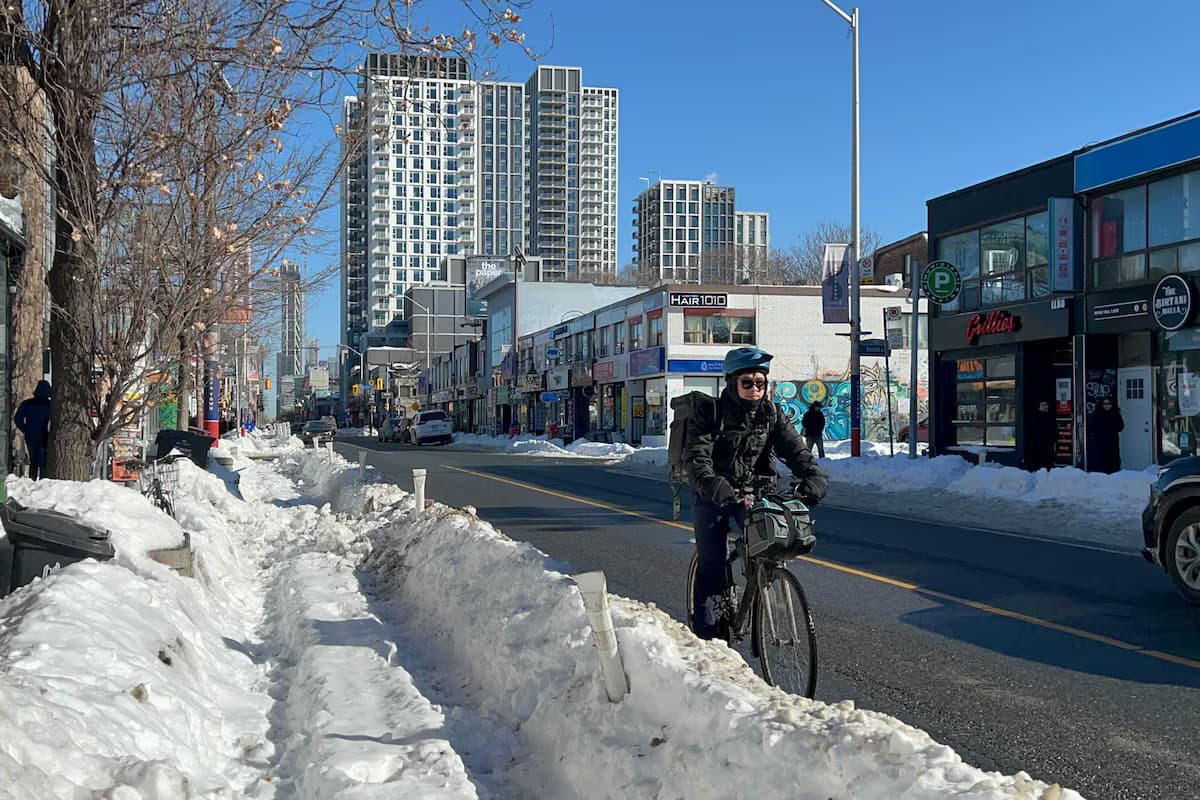
Toronto declares major snow event as storm could drop up to 50 cm across the GTA
Environment Canada warns up to 50 cm of snow and winds gusting to 50 km/h. Toronto has activated its Major Snow Event Response Plan and imposed parking restrictions on snow routes.
Copy link
By Torontoer Staff
Environment Canada has issued an orange winter storm warning for Toronto and much of the Greater Toronto and Hamilton Area, forecasting up to 50 centimetres of snow in parts of the region before the system moves out tonight. The City of Toronto activated its Major Snow Event Response Plan and enforced parking prohibitions on signed snow routes to speed snow clearing and protect emergency access.
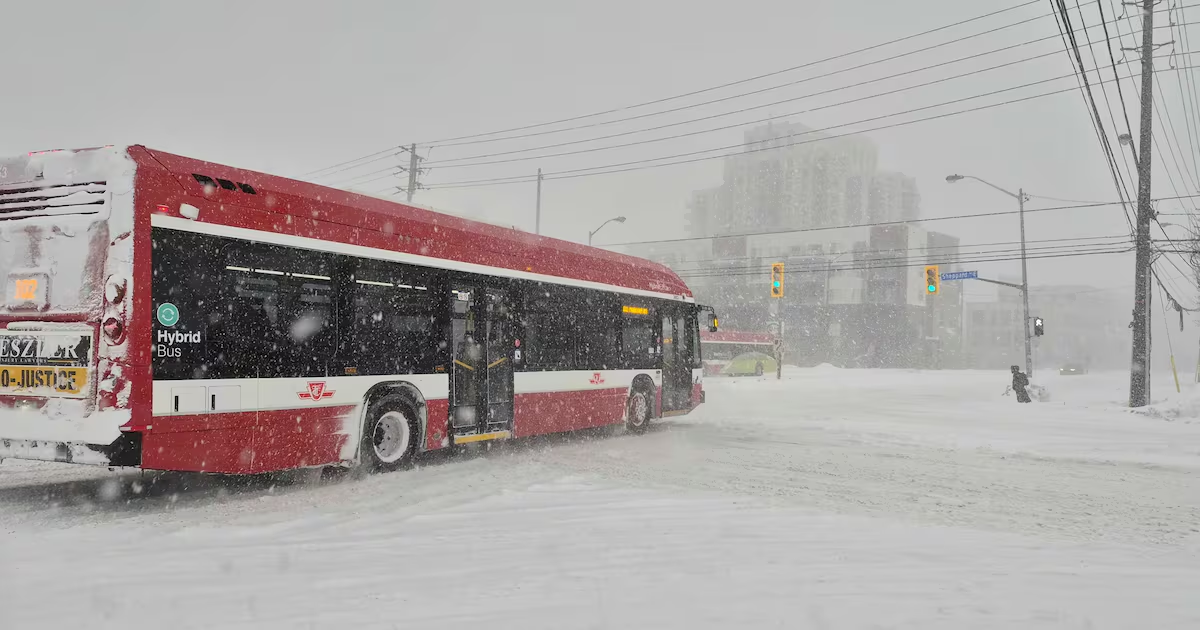
The storm is producing intense snowfall rates and strong winds, prompting widespread transit disruptions, airport cancellations and multiple collisions across area highways. Municipal crews are operating around the clock, and residents are being asked to avoid non-essential travel.
Quick facts
- Environment Canada warning: up to 50 cm in parts of the GTA, locally higher amounts possible
- Peak snowfall rates: 5 to 8 cm per hour in bands enhanced by Lake Ontario
- Wind gusts: up to 50 km/h, reducing visibility and creating blowing snow
- Transit and airport impacts: many TTC stops out of service, UP Express reduced, major cancellations at Pearson
What the city is doing
Toronto has declared a Major Snowstorm Condition and Significant Weather Event, opened the Emergency Operations Centre, redeployed staff and equipment for snow clearing, and enacted an enhanced parking enforcement and towing strategy. Parking on streets signed as snow routes, including all roads with streetcar tracks, is prohibited immediately. Vehicles left on those streets risk fines, towing and impoundment at the owner’s expense.
Plowing priorities start with expressways and major roads to maintain access for first responders and critical services, then transit routes and major corridors, followed by residential streets. The city is temporarily exempt from Provincial winter maintenance service levels while prioritizing community safety.
Transit, airports and roads
Toronto Pearson reported large numbers of cancellations and delays as crews focus on runway and apron clearing. UP Express reduced service frequency, and the TTC has taken 48 stops out of service with multiple route disruptions. On highways, police and OPP reported numerous collisions and several jack-knifed tractor-trailers, leading to lane and ramp closures on Highways 401, 403 and 407.
Officials repeatedly urged residents to avoid non-essential travel. The OPP said reduced traffic would help plows work more safely and efficiently, and Toronto officials warned of slippery roads, poor visibility and longer-than-usual clearing times because of the storm’s volume.
Notable incidents during the storm
- A snowplow struck a gas line near Queen Street West and Niagara Street, triggering evacuations and an on-site TTC shelter bus while Enbridge responded.
- A snowplow collided with a hydro pole in East York, leaving dangling wires but no reported injuries.
- Multiple collisions across the GTHA, with OPP reporting roughly 100 calls in 24 hours, none described as life threatening so far.
Why the snowfall is so heavy
CP24 meteorologist Bill Coulter attributed the storm’s intensity to a disrupted polar vortex that brought Arctic air into contact with warm, moist air, and to lake enhancement from Lake Ontario. He said narrow bands of heavy lake-effect snow, driven by easterly winds, can drop 15 to 20 cm in focused areas and produce rates of several centimetres per hour, allowing totals to accumulate quickly.
Everything really worked to make this an unbelievably powerful storm, the lake-effect bands giving us the perfect setup to get an enormous amount of snow.
Bill Coulter, CP24 meteorologist
Practical steps for residents
- Avoid non-essential travel and expect major delays if you must drive.
- If parked on a signed snow route, move your vehicle to avoid fines and towing.
- Check your municipality’s plow and salt maps for real-time clearing progress.
- Monitor airline and transit status before travelling to the airport or station.
- Use warming centres if you need shelter, and check the city website for locations and hours.
- Give snow-clearing crews room, and keep clear of equipment and piled snow at intersections.
Mayor Olivia Chow urged residents to stay inside if possible and to help neighbours where needed. She recommended layering up if travel is necessary and said city plow-tracker tools can show where crews have been working.
If you have to go outside, layer up and cover as much as you can, and keep warm. We are a caring city and if you see someone being stuck, give them a hand.
Mayor Olivia Chow
How to get updates
For evolving conditions check Environment Canada forecasts and local municipal pages for plow maps and service notices. Expect continuous updates on transit service, airport operations and road closures as crews respond through the evening.
This developing situation may change quickly. Monitor official channels for the latest advisories and follow public-safety instructions until the storm moves out and crews complete clearing operations.
snowstormTorontoEnvironment CanadatransitMayor Olivia Chow