Toronto digs out after record snowfall that closed schools and snarled transit
A historic weekend storm dumped record snow across Toronto, shutting schools, grounding flights and disrupting transit. Residents turned the city into a winter playground while crews begin days of cleanup.
Copy link
By Torontoer Staff
Toronto spent Monday digging out after a weekend storm that set single-day snowfall records, closed schools and snarled transit. Environment Canada recorded the heaviest one-day dump in decades, and city crews warned that clearing the piles will take several days.
The storm left downtown and many neighbourhoods under deep snow, forced hundreds of flight cancellations at Pearson and Billy Bishop airports, and prompted major service interruptions on the Toronto Transit Commission. At the same time, families and neighbourhoods embraced the pause, turning parks and streets into sledding hills.
Records and immediate impacts
Environment Canada said the storm produced the highest single-day snowfall in Toronto since records began, and contributed to Pearson International Airport’s snowiest month on record. The airport recorded one of its largest daily totals during the storm, compounding travel disruption and cancellations.
Traffic across the Greater Toronto Area stalled as roads became treacherous. Ontario Provincial Police reported roughly 200 collisions and about 150 calls for vehicles stuck in ditches across the greater Toronto and Hamilton regions in a 24-hour period. In the wider region, the system caused widespread disruption across Eastern Canada and parts of the United States.
City response and timeline for cleanup
Mayor Olivia Chow said crews were working around the clock to clear streets and sidewalks. City plows had completed an initial pass on local streets and sidewalks by Monday morning, and officials said they would continue operations until the work was done.
We will continue plowing non-stop and we won’t stop until the job is done.
Olivia Chow, mayor of Toronto
City manager Paul Johnson described the storm as a major event and set expectations for the pace of recovery. He said plowing would be largely complete by early Tuesday and crews would begin removing accumulated snow from streets on Wednesday.
This was a major event. You can’t get a storm of this magnitude and have it disappear in a 24-hour cycle.
Paul Johnson, city manager
Chow ruled out requesting military assistance, a move used in past extreme winters, saying the city’s expanded fleet and staffing should handle the cleanup. Officials did note that private snow-ploughing contracts do not include snow removal, a gap the mayor called unfortunate.
Transit, travel and public safety
The Toronto Transit Commission reported major disruptions. Subway service was suspended between several stations, shuttle buses faced long waits and some bus stops were temporarily out of service. Commuters faced extended travel times and limited options during peak hours.
Air travel was hit hard. Hundreds of flights were cancelled at Pearson and Billy Bishop, leaving many travellers stranded. Road conditions contributed to crashes and a fatal incident outside the immediate Toronto area where a vehicle lost control on a ramp.
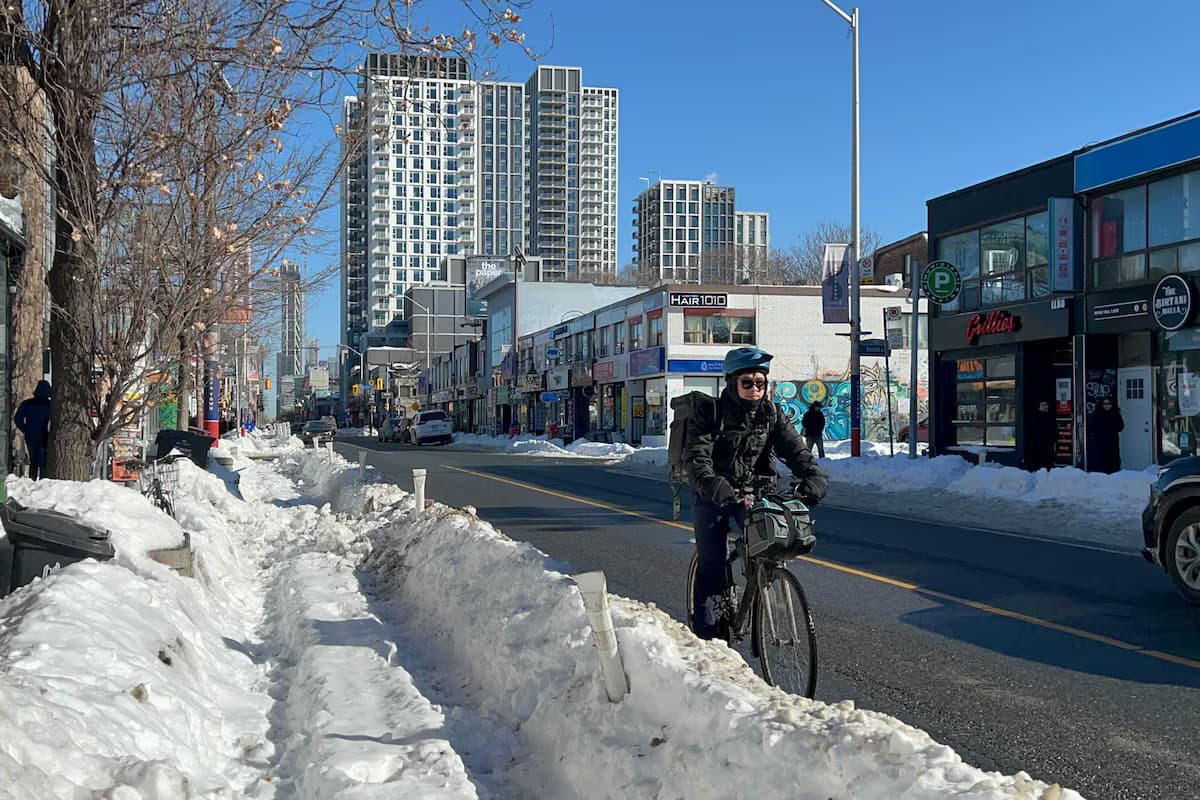
The deep snow and cold also posed risks for outdoor workers and delivery riders. Many people reported falls on slippery streets and struggled with slushy sidewalks squeezed between snowbanks.
A city turned into a winter playground
Despite the disruption, many Torontonians treated the snow day as an opportunity. Parks filled with families building forts and racing toboggans. In Trinity Bellwoods Park, children and adults alike converged on the steep pit known as the dog bowl to sled and practise jumps.
I would say none of these kids have seen this much snow in downtown Toronto. It’s great. It makes you feel alive.
Rob Pettigrew, local resident
Small businesses reported brisk foot traffic from sledders and neighbours checking in on each other. Cafés served hot chocolate to families at park edges, and an ice-cream shop on Queen Street East stayed open for scoops and warm drinks.
Residents improvised ways to keep moving. Some cross-country skied down quiet streets, one person rode a snowboard on a small hill in Berczy Park, and neighbours organised shovelling parties to clear sidewalks and driveways.
What comes next
Environment Canada warned temperatures will remain colder than normal, limiting natural melt and prolonging the presence of snowbanks and drifts. The agency advised caution for anyone clearing heavy snow, and reminded residents to take breaks and avoid overexertion.
Mother Nature is not going to help get their car out of the snowbank. Those snowbanks look like they’re going to be around for the foreseeable future.
Geoff Coulson, Environment Canada meteorologist
City officials asked for patience as crews complete ploughing and begin hauling snow away. Residents are encouraged to follow local updates for parking bans or temporary closures that will speed removal and improve safety.
How Torontonians made the most of it
For families with children, the storm provided rare unscheduled time together. Parents reported tired, happy kids at the end of the day after sledding, snow-fort building and neighbourhood games. Local pet owners walked dogs through altered paths carved by pedestrians.
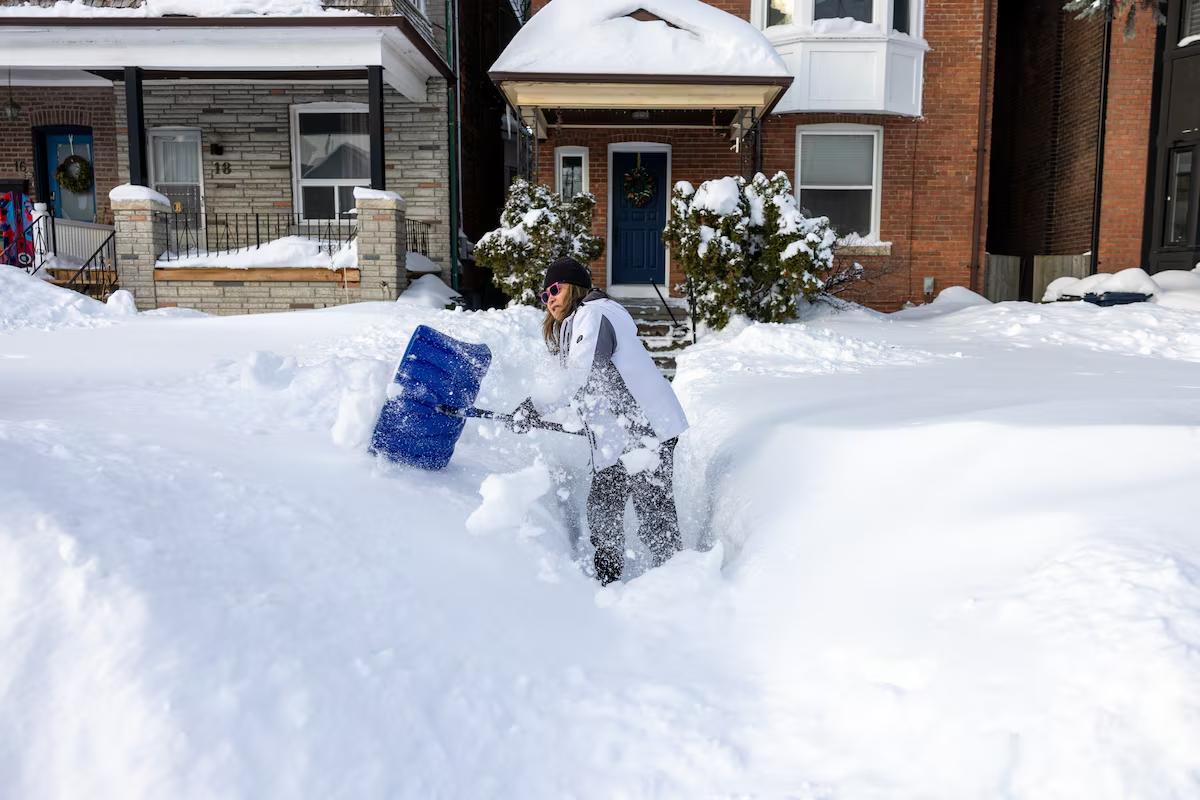
At the same time, many residents dealt with the practical aftermath. Cars had to be dug out, sidewalks cleared and roofs checked for heavy loads. Businesses that rely on foot traffic saw quick shifts in customer patterns as people sought warm places and hot drinks between outdoor play.
If you experienced the storm, Torontoer wants to hear how you coped and how your community responded. Share your stories and photos so we can document the ways the city came together through this historic snowfall.
Torontosnowstormtransitweathercommunity