Trump announces 10% tariffs on eight countries over Greenland dispute
The U.S. president said eight NATO allies will face 10% tariffs after opposing U.S. control of Greenland, prompting swift European condemnation and urgent NATO and EU consultations.
Copy link
By Torontoer Staff
U.S. President Donald Trump announced a 10 percent tariff on eight European countries after they opposed American control of Greenland, setting off immediate diplomatic backlash and questions about legal and logistical feasibility.
The move targets Denmark, Norway, Sweden, France, Germany, the United Kingdom, the Netherlands and Finland. European leaders called the threat damaging to transatlantic ties and warned it could benefit strategic rivals.
What the White House said
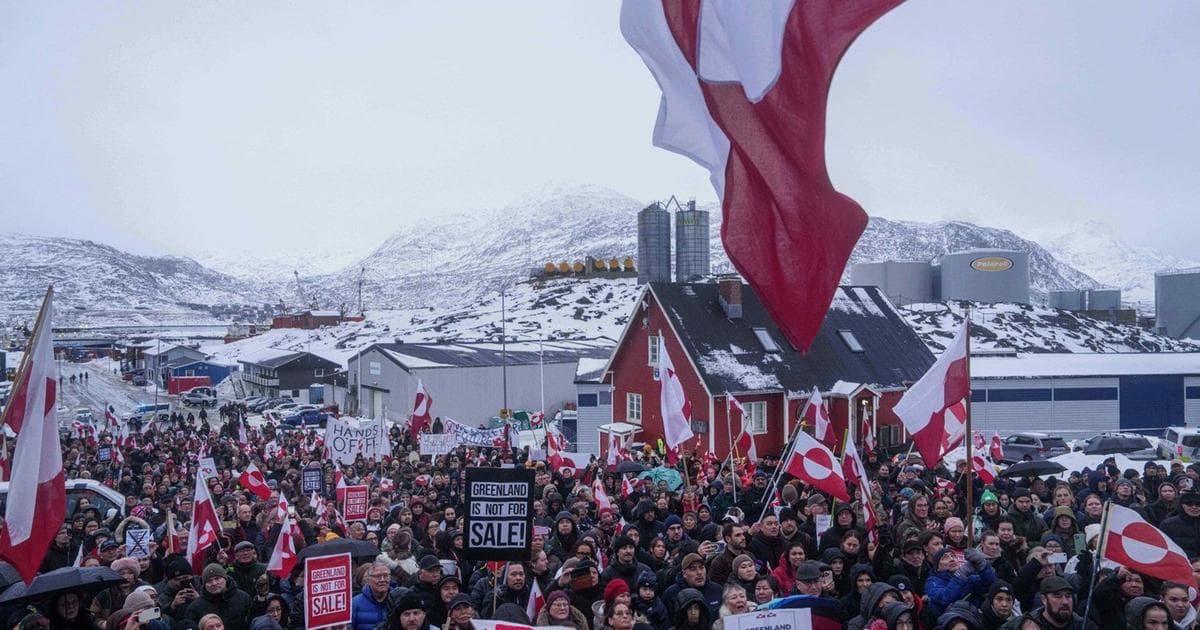
The tariff announcement was framed as leverage to force talks with Denmark and other allies over Greenland, a semiautonomous territory of NATO member Denmark that the White House described as critical to U.S. national security. The president spoke as thousands of Greenlanders were concluding a protest outside the U.S. Consulate in Nuuk.
European countries have recently deployed small units to Greenland for Arctic security training exercises. The White House said the deployments and political opposition warranted an economic response, but it gave no immediate plan for how the tariffs would be implemented across different legal and trade arrangements.
Which countries are affected
- Denmark
- Norway
- Sweden
- France
- Germany
- United Kingdom
- Netherlands
- Finland
European and NATO response
The eight nations issued a joint statement stressing that their deployments were part of a pre-planned Danish exercise, Arctic Endurance, and that the activity posed no threat. The statement accused the tariff threat of undermining transatlantic relations and warned it could trigger a downward spiral.
Tariff threats undermine transatlantic relations and risk a dangerous downward spiral. We will continue to stand united and coordinated in our response.
Joint statement by the eight countries
EU envoys arranged emergency talks as leaders assessed how to respond. Officials noted legal and practical questions, including how a unilateral U.S. tariff would apply given the European Union is a single economic zone for trade, and whether U.S. domestic law would allow such measures.
China and Russia will benefit from the divisions between the U.S. and Europe. If Greenland's security is at risk, we can address this inside NATO. Tariffs risk making Europe and the United States poorer and undermine our shared prosperity.
Kaja Kallas, Estonian prime minister
Political fallout and domestic criticism
The tariff threat drew criticism across the political spectrum in Europe and within the United States. Italian Prime Minister Giorgia Meloni, typically an ally of the president, called the tariffs a mistake and said the small troop deployments were aimed at protecting Greenland from other actors, not the United States.
These tariffs will hurt us.
Nigel Farage, Reform UK leader
In the U.S., Senator Mark Kelly argued the move would make Americans pay more for territory that is not needed and warned that the administration’s approach was damaging U.S. reputation and alliances.
Legal and practical questions
Officials in Europe and Washington said it was unclear how the tariffs would be implemented. The European Union operates as a single trade zone, complicating any country-specific tariff approach. On the U.S. side, emergency economic powers are available to the president, but some of those authorities are under legal challenge in the courts.
Norway and the United Kingdom are not EU members, so any tariff that targets an EU-wide framework could raise further technical and diplomatic issues. EU envoys and NATO members were expected to push for clarification and a quick diplomatic de-escalation.
Implications for Arctic security
The dispute highlights competing views of Arctic security. European deployments have been described as routine training to protect northern approaches. Washington has framed Greenland as strategically vital. Analysts say unilateral economic pressure risks creating openings for China and Russia to expand influence in the region.
Allies emphasised the need to manage disagreements within NATO and to keep coordination on Arctic security intact. The coming days will show whether consultations produce a diplomatic solution or further escalation.
For now, the tariffs are a threat that has united European parties and prompted emergency talks. Officials on both sides said they would continue discussions, while capitals from Copenhagen to Washington consider next steps.
TrumpGreenlandtariffsNATOEurope