U.S. President Donald Trump announced on Thursday that Canada is no longer invited to join his newly unveiled "Board of Peace," rescinding an earlier invitation extended to Mark Carney. The move drew swift analysis from international affairs scholars and immediate political fallout between Ottawa and Washington.
Nader Hashemi, associate professor of Middle East and Islamic politics at Georgetown University, said the revocation is advantageous for Canada because it removes the need to take part in what he called a personalised, top-down project promoted by Trump.
I think it’s a huge blessing in disguise because then Canada doesn’t have to make a decision to join this vanity project that Donald Trump is pursuing. Trump has made the decision already for him.
Nader Hashemi, Georgetown University
What Trump announced in Davos and online
Trump formally introduced the Board of Peace at the World Economic Forum in Davos, Switzerland, presenting it as a body to help maintain a ceasefire between Israel and Hamas and to oversee U.S.-led reconstruction in Gaza. Later the same day he posted on Truth Social that Canada would not take part, calling the board "the most prestigious Board of Leaders ever assembled, at any time."
The White House release describing the initiative framed it as a plan to transform Gaza from a region "plagued by conflict and despair into one defined by opportunity, hope, and vitality," and said the board would mobilise resources, enforce accountability, and guide demilitarisation and governance reform.
Why some critics worry about the board’s structure
Critics have flagged governance issues in the board’s charter. A clause repeated throughout the document gives the chairman the power to approve virtually all decisions, a provision Hashemi says concentrates authority in Donald Trump and reflects a personalised approach to international governance.
It basically puts Donald Trump in this position as a lifetime owner of this new Board of Peace; he appoints people who he wants and as we just saw last night, he disinvites people.
Nader Hashemi
The charter also does not explicitly mention Gaza by name, a detail opponents say underlines doubts about the board’s mandate and its relationship to existing international organisations such as the United Nations.
Who has signed on, and who has declined
So far, 35 countries have agreed to join the board. Those listed include Israel, Argentina, Saudi Arabia, Turkiye, Hungary and Pakistan. Several traditional U.S. allies, including Britain, France, Norway and Sweden, declined invitations. Major powers such as China and Russia have not committed, and their potential involvement has prompted concern among countries critical of Russia’s actions in Ukraine.
Hashemi argued that many members signed on to curry favour with Trump or to further national interests through personal ties with the U.S. president.
What they have in common is most of them are dictators and dictatorships in non-democratic states and so there’s a certain affinity in how they think about the world because they think about it through the lens of authoritarianism.
Nader Hashemi
Mark Carney and Canada’s stance
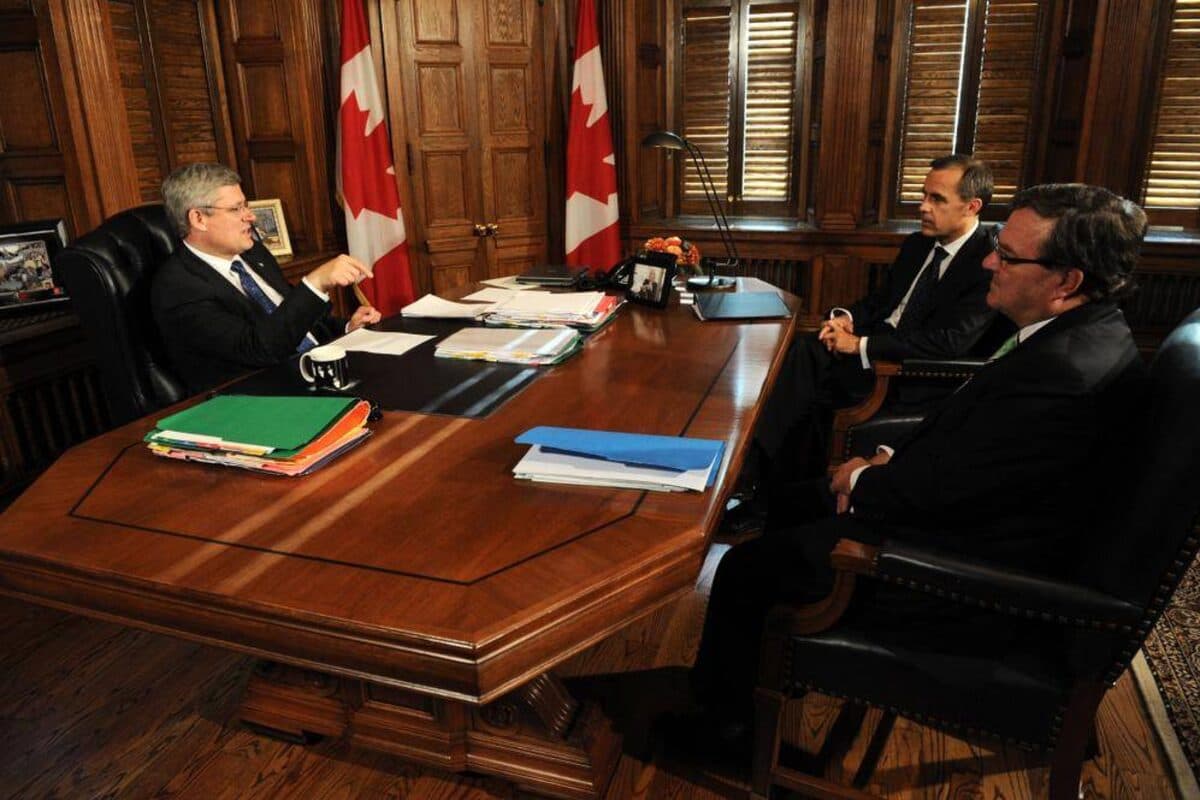
Carney, the former Bank of England and Bank of Canada governor, had not formally joined the board. He initially agreed in principle, then raised concerns about the board’s structure and a reported US$1-billion membership fee. The revocation of Canada’s invitation removed an immediate decision point for Prime Minister Justin Trudeau and his government.
The announcement followed an exchange of barbs between Trudeau and Trump earlier in the week. Trump said Canada "lives because of the U.S.," and Carney replied during a speech by emphasising Canada’s sovereignty and partnership with the United States.
Canada doesn’t live because of the United States, Canada thrives because we are Canadian.
Mark Carney
Implications for international diplomacy
Observers warn the Board of Peace could complicate existing multilateral efforts. Some critics say a Trump-led body aiming to resolve conflicts and direct reconstruction efforts risks creating a parallel institution that undercuts UN mechanisms and established diplomatic channels.
For Ottawa, the disinvitation reduces political risk in the short term, removing pressure to align with a controversial initiative that has attracted limited uptake among traditional Western allies. For other countries, the choice to join will reflect calculations about access to U.S. influence, domestic politics, and views on the board’s legitimacy.
What to watch next
- Whether other invited countries publicly decline or have their invitations rescinded
- Any formal offer or role proposed to Canada or to other Western allies after the initial rollout
- How the board defines its relationship with the UN and existing reconstruction plans for Gaza
- Responses from China and Russia about participation or non-participation
Trump’s decision to remove Canada from the Board of Peace settles one immediate question, but it raises others about governance, legitimacy and how international reconstruction efforts will be coordinated. The coming weeks will show whether the board consolidates support, or becomes another contested forum in global diplomacy.