Trump’s Greenland push sparks major rift in NATO
President Donald Trump’s bid to acquire Greenland and threats of tariffs have provoked allied opposition and raised questions about NATO’s cohesion and Europe’s reliance on US military power.
Copy link
By Torontoer Staff
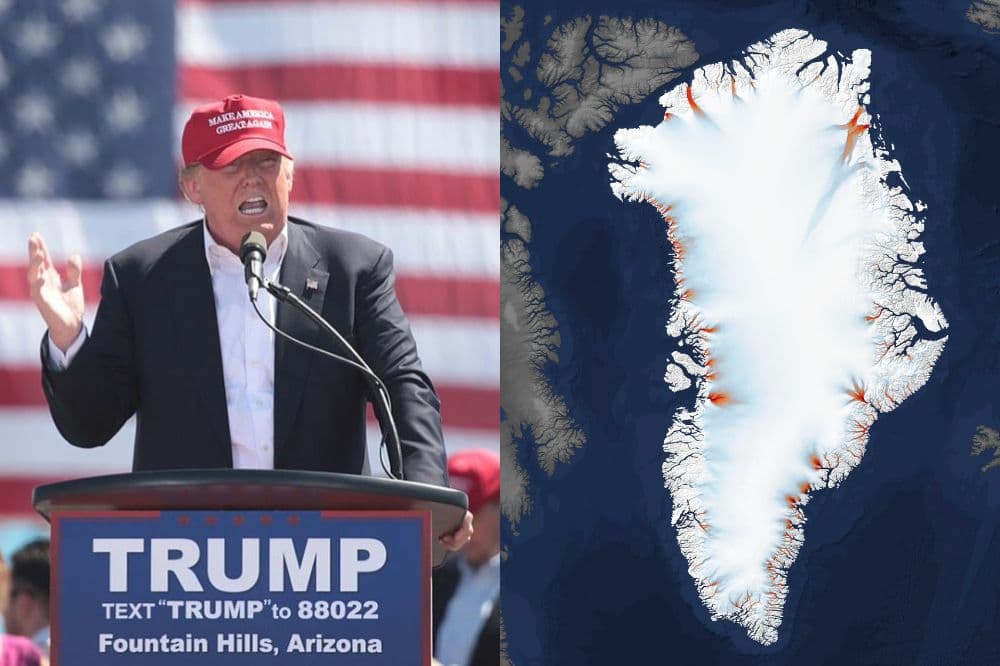
President Donald Trump’s public demand to buy Greenland and his threat of tariffs on European countries have provoked an unprecedented dispute within NATO and prompted firm rebukes from allied capitals. Mr Trump said on January 17 that he would impose a 10 percent tariff on imports from eight European countries that had sent troops to Greenland two days earlier, and that the levy would rise to 25 percent in June until a deal for the “Complete and Total purchase of Greenland” is reached.
European leaders immediately rejected the demand and the tariff threat, framing both as an unacceptable assault on allied sovereignty. The episode has highlighted how a unilateral US policy on Greenland could undermine transatlantic trust and complicate NATO’s collective-defence posture.
What Trump said and the immediate fallout
In a social-media post, Mr Trump accused allies of creating “a very dangerous situation for the Safety, Security, and Survival of our Planet.” Talks between US and Danish officials last week produced no sale, and thousands of Greenlanders and Danes protested the idea that the autonomous Arctic territory could be sold. France, Sweden and Britain issued sharp responses. Emmanuel Macron said, “No intimidation nor threat will influence us, neither in Ukraine, nor in Greenland.” Sweden’s prime minister, Ulf Kristersson, declared, “We will not allow ourselves to be blackmailed.” Britain’s prime minister, Sir Keir Starmer, called the tariff threat “completely wrong.”
Why Greenland matters to NATO
Greenland sits astride critical air and sea lanes in the North Atlantic and hosts infrastructure important for early warning, surveillance and Arctic operations. NATO defence plans for Europe, including those covering Greenland, were written under the assumption of robust US involvement. An American general has served as supreme allied commander Europe for 75 years, and US air power, intelligence and logistics remain central to NATO’s capacity to deter and, if necessary, repel Russian aggression.
If the United States decides to militarily attack another NATO country, then everything would stop. That includes NATO and therefore post-second-world-war security.
Mette Frederiksen, Denmark’s prime minister
Allied planners warn that a unilateral American annexation, or even the credible threat of one, would fracture the compact that underpins Article 5, the alliance’s mutual-defence clause. European confidence in US commitments has already been strained by repeated US questioning of Article 5 in recent years.
Possible European responses
European capitals face a difficult calculus between economic reliance on the United States and political resistance to any attack on member sovereignty. Options under discussion include coordinated tariffs or sanctions, targeting specific US sectors, and accelerating defence spending to reduce reliance on American capabilities. The European Union has historically tempered trade retaliation because of security dependencies, but officials say the Greenland episode may change that calculation.
- Impose reciprocal tariffs or sanctions on US goods and services
- Target US tech companies through regulatory or trade measures
- Increase defence spending and invest in independent logistics and intelligence
- Reconsider basing agreements and force posture for leverage
Operational and security consequences
Any rupture would have immediate operational implications. Many European air forces rely on US communications, targeting data and munitions to operate advanced platforms such as the F-35. Britain’s nuclear deterrent and submarine force, European signals intelligence and logistics chains also depend on deep US cooperation. Loss of that cooperation would constrain allied deterrence and complicate responses to Russian probes.
How does NATO continue its critical work on Russia in light of its most powerful member infringing on the territorial sovereignty of another member?
Julie Smith, former US envoy to NATO
Short-term disruption would not necessarily dissolve NATO overnight. Analysts expect a period of strained relations in which the alliance would continue basic functions, but operate without the trust that has underpinned it for decades. That loss of trust raises risks across multiple theatres, including the Arctic, the eastern flank and beyond.
What comes next
At stake is more than Greenland. The dispute exposes how policy moves by the United States can force European governments to choose between economic and security priorities. Some governments may accept a limited compromise to preserve the alliance. Others may push for stronger collective measures at the same time as building independent defence capacity. The immediate course will depend on diplomatic engagements in coming weeks and on whether the White House follows through on tariffs or raises the prospect of acquisition or coercion.
For now, allied capitals have framed the issue as a test of mutual defence and sovereignty that could reshape transatlantic relations. The response from Europe, and Washington’s next steps, will determine whether NATO weathers the crisis or enters a prolonged era of mistrust.
NATOGreenlandDonald Trumptransatlantic relationsdefence