Trump tells Davos audience Canada 'lives because of the United States', singles out Mark Carney
At the World Economic Forum in Davos, U.S. President Donald Trump criticised Canadian speaker Mark Carney and repeated claims about Greenland and American economic dominance.
Copy link
By Torontoer Staff
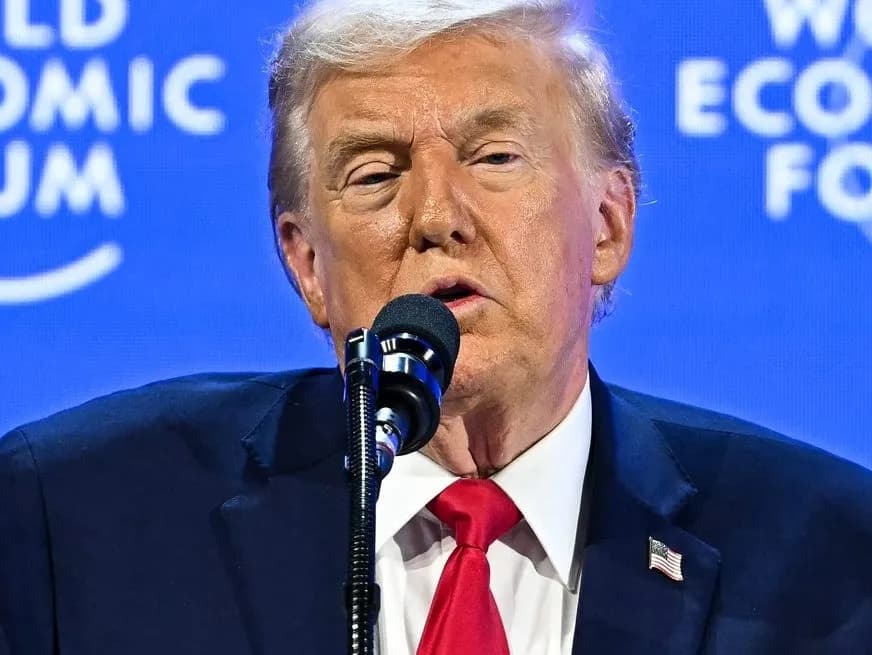
U.S. President Donald Trump told attendees at the World Economic Forum in Davos on Wednesday that "Canada lives because of the United States," and told Canadian speaker Mark Carney to "remember that" when making public remarks. The comments came during a wide-ranging address that also revisited Trump's longstanding interest in Greenland and his claim that when America prospers, the world follows.
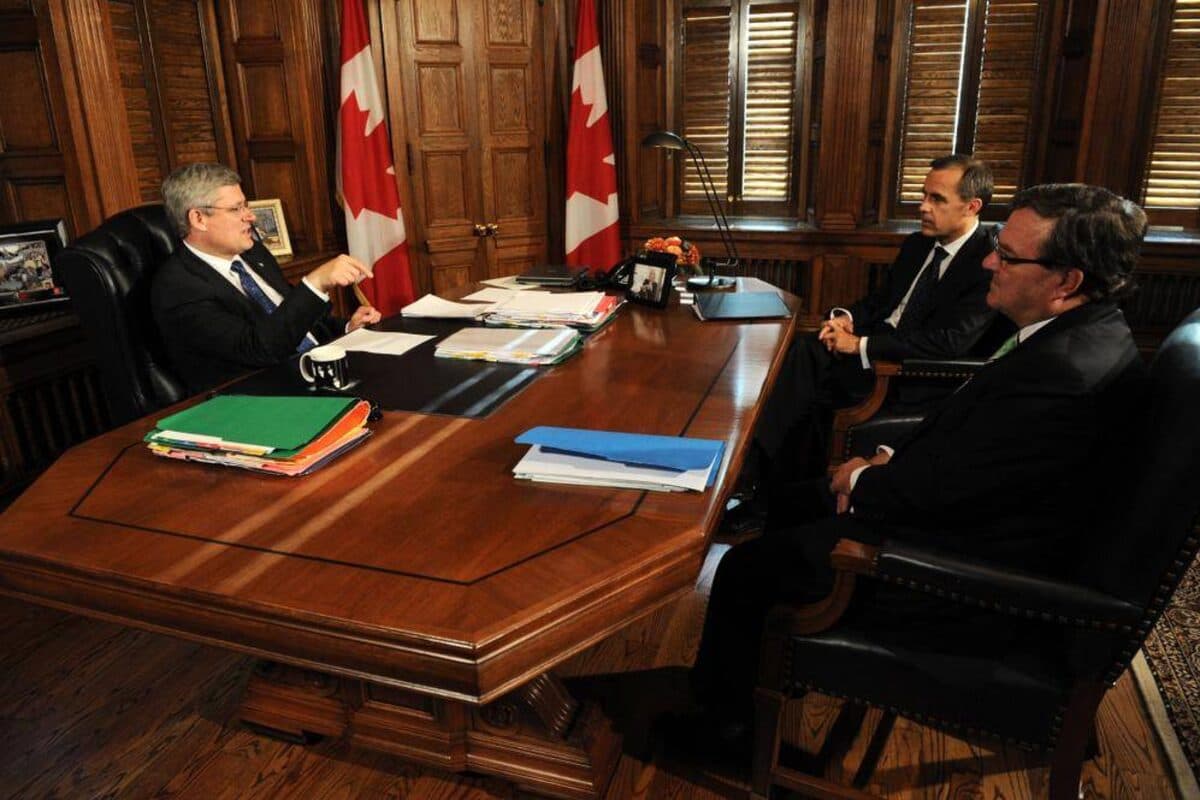
Trump's remarks directly referenced a speech Carney delivered a day earlier at the forum. Carney, a Canadian economist and former governor of the Bank of Canada and the Bank of England, had said the old order that once governed global affairs is over and argued that middle powers must unite and act together.
What Trump said in Davos
Speaking to a packed session at the World Economic Forum, Trump characterised Carney's remarks as insufficiently appreciative of the United States. "I watched your prime minister yesterday, he wasn't so grateful," Trump said, repeating the line that "Canada lives because of the United States" and adding, "Remember that, Mark, the next time you make your statements."
Canada lives because of the United States. Remember that, Mark, the next time you make your statements.
U.S. President Donald Trump, World Economic Forum, Jan. 21, 2026
Trump also criticised what he described as European economic weakness and suggested Canada should be "grateful" for various benefits it receives from the United States. He framed his comments as part of a broader narrative that U.S. economic gains lift other countries, saying "when America booms the whole world booms."
Carney's remarks and the context
Carney, who spoke at Davos on Tuesday, told the forum that the previous postwar order has fragmented and that middle powers need to coordinate more closely to manage new geopolitical and economic challenges. He stressed co-operation among middle powers as an alternative to relying solely on great powers for global stability.
The former order that governed the world is over, and middle powers must unite and act together.
Mark Carney, Davos speech, Jan. 20, 2026
Carney's call for collaboration was presented as an argument for pragmatic co-operation rather than confrontation. His speech did not single out the United States, but his references to shifting power dynamics clearly touched on Washington's role in the global system.
Greenland, territory comments and broader themes
Trump used his Davos address to revisit a controversial idea he has raised in the past, saying that Greenland is "actually part of North America" and calling it "our territory." He added that he was not planning to use force to acquire Greenland, though he has previously floated purchasing the island from Denmark.
Those remarks came alongside wider assertions about U.S. economic leadership. Trump told the forum that Europe is "not heading in the right direction" and repeated the theme that other economies track behind the United States in boom and bust cycles.
Why the comments matter for Canada
The exchange highlights tensions between public messages on co-operation at Davos and sharper bilateral rhetoric in public remarks. Canada and the United States remain deeply integrated through trade, investment and security arrangements. Public admonishments from the U.S. president can complicate diplomatic relations and add pressure to ongoing talks on trade and defence co-operation.
- Trade links: the U.S. is Canada’s largest trading partner, making rhetoric on gratitude and contributions politically sensitive.
- Security ties: NATO and continental defence arrangements mean diplomatic friction can have wider implications.
- Public perception: heated comments at high-profile forums shape media coverage and public debate in both countries.
The Canadian government did not issue an immediate, detailed response during the Davos sessions. At international gatherings such as the World Economic Forum, officials often balance public rebuttals with private diplomatic engagement.
What comes next
Expect careful messaging from Ottawa in the days after Davos. Bilateral issues raised in public by leaders at the forum typically filter into ministerial and ambassador-level discussions. Analysts will also watch whether Trump's remarks affect negotiations on trade, tariffs or defence co-operation, or whether they remain largely rhetorical.
The World Economic Forum runs this year from Jan. 19 to Jan. 23, and several high-profile leaders and business figures are still due to speak. Remarks made on the Davos stage often reverberate for weeks and shape headlines at home and abroad.
For now, the exchange underscores the gap between calls for collective international responses to global challenges and blunt national messaging delivered at the world’s highest-profile economic forum.
TrumpDavosWorld Economic ForumCanadaMark Carney