Trump threatens 200 per cent tariffs on French wine to pressure Macron on 'Board of Peace'
Trump warned of 200% tariffs on French wines and champagnes to push Macron to join his 'Board of Peace'. Paris says it will decline and Brussels weighs a collective response.
Copy link
By Torontoer Staff
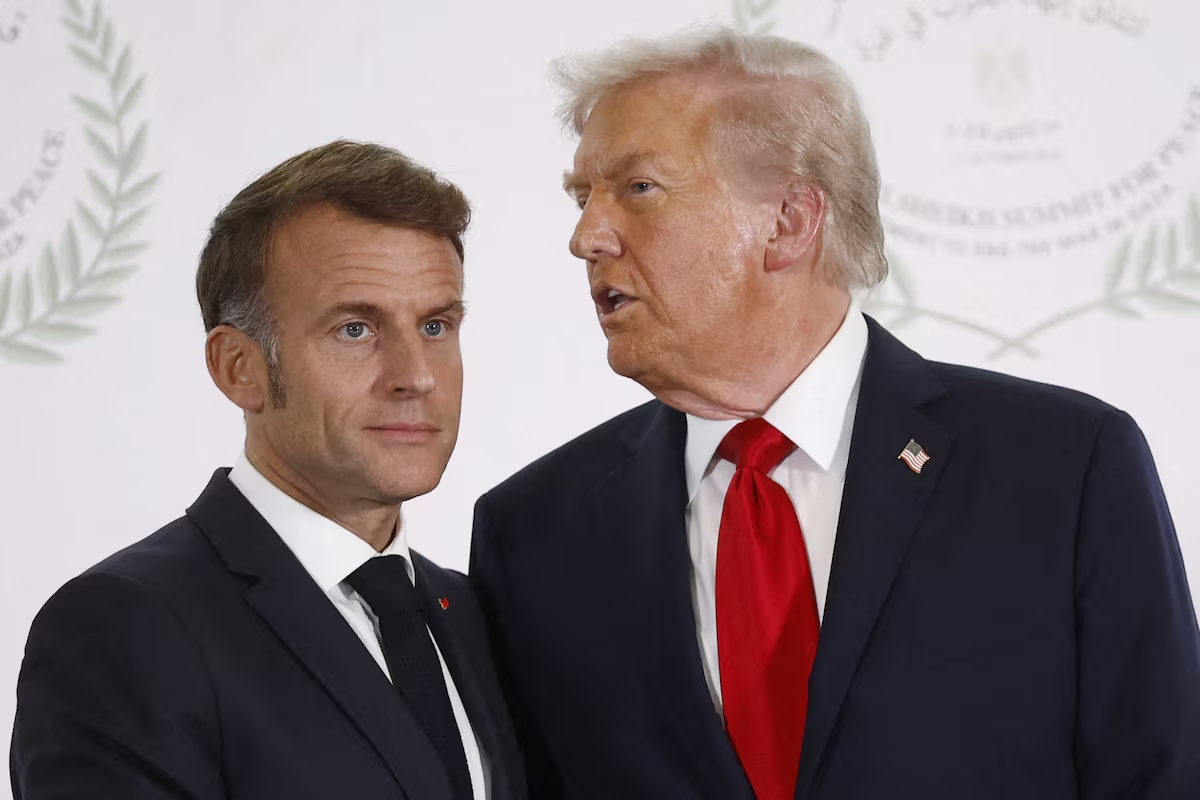
U.S. President Donald Trump on Monday threatened to impose 200 per cent tariffs on French wines and champagnes as leverage to persuade French President Emmanuel Macron to join a U.S.-led "Board of Peace" initiative. A source close to Macron said the French president intended to decline the invitation.
The comment came as Macron was in Davos for a one-day visit, with no plans to extend his stay when Trump arrives in the Swiss resort. The exchange has raised trade and diplomatic concerns across Europe and prompted immediate reaction from French industry and political figures.
What Trump said and the context
Asked about Macron’s reported refusal to join the initiative, Trump said, "Did he say that? Well, nobody wants him because he will be out of office very soon. I’ll put a 200 per cent tariff on his wines and champagnes, and he’ll join, but he doesn’t have to join." He also published a private message from Macron criticising U.S. actions over Greenland.
The Board of Peace is presented by the U.S. administration as a new framework to address conflicts starting with Gaza and then expanding to other crises. Diplomats have expressed concern that the plan could undercut the role of the United Nations. A draft charter seen by Reuters said countries wanting membership to last more than three years would be asked to contribute $1-billion.
Immediate impact on the French wine and spirits sector
Wine and spirits from the European Union currently face a 15 per cent U.S. tariff, a rate France and the EU have been trying to reduce since a U.S.-EU trade understanding last year. The United States is the largest market for French wine and spirits, with shipments valued at about €3.8 billion in 2024.
Industry analysts warned that renewed tariff threats would discourage investment and force companies to hold cash rather than expand. Laurence Whyatt, head of European beverages research at Barclays, said the threats would make the sector harder to invest in and cause firms to keep reserves to weather potential further measures.
The fact that we’re getting more threats is going to make the industry harder to invest in, it’s going to make it harder for companies to make decisions for their own investments.
Laurence Whyatt, Barclays
Shares in luxury group LVMH, owner of major champagne houses, fell about 2 per cent in early trading after the remarks. Gabriel Picard, chairman of the French wine and spirits export lobby FEVS, called for a coordinated European response and urged calm.
These declarations by the President of the United States must be taken seriously but with composure.
Gabriel Picard, FEVS
FEVS said any response should be handled at the European level. The industry has already suffered: Picard said U.S. business for French wine and spirits fell by 20 to 25 per cent in the second half of last year after earlier tariff measures.
European options and political reaction
European officials have discussed a range of measures to respond, from targeted tariffs to broader countermeasures. The European Commission could deploy its Anti-Coercion Instrument, a tool designed to deter economic pressure from third countries, while Brussels has also signalled plans for a wider tariff package in response to prior U.S. threats.
It’s brutal, it’s designed to break us, it’s a tool for blackmail. All of this is outrageous.
Annie Genevard, French Minister of Agriculture
A Macron aide said the Élysée noted Trump’s remarks and stressed that using tariff threats to influence another country’s foreign policy was unacceptable. European leaders face a choice between measured retaliation through existing WTO and EU instruments, and a tougher stance intended to deter future coercion.
- Increase tariffs on targeted U.S. goods
- Use the EU’s Anti-Coercion Instrument to impose restrictions
- Pursue dispute settlement through the World Trade Organization
- Coordinate financial or regulatory measures aimed at sectors vulnerable to U.S. pressure
What to watch next
Markets, exporters and governments will be monitoring Davos and follow-up statements in Paris and Brussels. Any escalation would hit producers, distributors and luxury brands that rely heavily on the U.S. market and could reshape transatlantic trade planning ahead of European elections.
For now, French officials say Macron will decline the Board of Peace invitation and maintain that tariff threats are unacceptable. The dispute illustrates how trade measures are being used as an extension of diplomacy, and how that approach risks economic blowback for both producers and consumers.
The coming days will show whether the rhetoric remains political signalling or moves into concrete trade measures, and how the EU chooses to respond in a way that protects its industries while managing broader diplomatic relations.
TrumpMacrontradewinetariffsEUDavos