Trump withdraws Canada from Board of Peace invitation after diplomatic spat
President Trump said he was revoking Canada's invitation to join the new Board of Peace. The move follows criticism from former central banker Mark Carney and questions from European leaders.
Copy link
By Torontoer Staff
President Donald Trump has withdrawn an invitation for Canada to join his newly formed Board of Peace, posting the decision on Truth Social and addressing the message to Canada’s prime minister. The White House did not offer an explanation, and Ottawa has not yet issued a formal response.
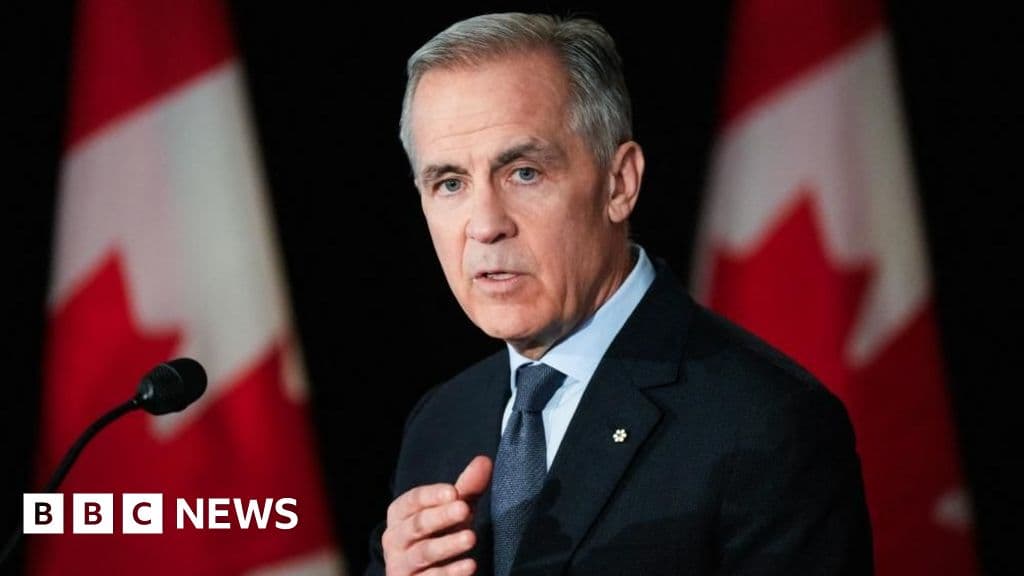
The move comes after remarks this week by former central banker Mark Carney warning of a potential "rupture" in the US-led global order. Canada had signalled it would accept the invitation in principle but said it would not pay a proposed $1 billion membership fee that the United States has suggested permanent members should contribute.
What Trump announced
Trump posted a short message on Truth Social stating that the Board of Peace was withdrawing its invitation to Canada. The post did not explain the reason for the decision or indicate whether the revocation was final. The Board of Peace is being presented by the United States as a new international body for resolving conflicts, with Trump named as chairman.
Please let this Letter serve to represent that the Board of Peace is withdrawing its invitation to you regarding Canada's joining.
Donald Trump, Truth Social post
Canada's position
Ottawa had indicated it would join the board in principle while rejecting the $1 billion fee. Canadian officials have not publicly commented on the revocation. The timing follows high-profile remarks in Davos by Mark Carney, who warned of strains in the current international order, remarks that drew wide attention and may have contributed to tensions with the White House.
European reaction and wider concerns
European leaders have expressed reservations about the Board of Peace, questioning aspects of its charter, governance and how it would fit with existing international institutions such as the United Nations. European Council president Antonio Costa said leaders had "serious doubts" about the board's scope and governance, but said they were willing to work with the United States on implementing a peace plan for Gaza, with the board acting as a transitional administration if appropriate.
We have serious doubts about a number of elements in the charter of the Board of Peace related to its scope, its governance and its compatibility with the UN Charter.
Antonio Costa, European Council president
France described the charter as incompatible with its international commitments, especially UN membership. The United Kingdom has expressed concern about the inclusion of Russian President Vladimir Putin on the body, given Russia's ongoing war in Ukraine. Spain's prime minister said his country had declined to participate.
Who has signed up and what the board would do
According to the White House, roughly 60 nations were invited to join the Board of Peace and about 35 have agreed so far. Those listed as participants include Argentina, Belarus, Morocco, Vietnam, Pakistan, Kazakhstan, Uzbekistan, Kosovo, Hungary, Egypt, Turkey, Qatar, Jordan, Indonesia and Saudi Arabia. None of the other permanent members of the UN Security Council, including China, France, Russia and the UK, have committed to participation.
The board was initially presented by US officials as a mechanism to help end the war between Israel and Hamas and oversee reconstruction in Gaza. Critics note that the board's proposed charter does not explicitly reference the Palestinian territories, and some observers say it appears designed to take on functions currently held by the UN. The charter would also name Trump chairman for life, a feature that has drawn scrutiny.
Diplomatic implications
With Canada removed from the invited group and several European governments expressing reservations, the board faces an uncertain path to legitimacy. Questions about funding, legal authority and overlap with existing multilateral bodies have heightened tensions among allies at a moment when coordination on Gaza and broader security issues remains fraught.
For Ottawa, the episode underscores the diplomatic tightrope of engaging with a US-led initiative that divides traditional partners and raises questions about the future architecture of international conflict resolution.
Where things stand now
The White House lists around 35 countries as having agreed to join the Board of Peace, but key global players remain on the sidelines. Canada has not confirmed whether it will pursue other diplomatic options in response to the revocation. European leaders have signalled they will continue to press for clarity on the board's mandate and its compatibility with the UN system.
As the situation evolves, the Board of Peace will need to clarify its charter, funding model and relationship with established international institutions if it hopes to gain broader support. For now, the withdrawal of Canada's invitation is the latest sign of friction around the initiative.
CanadaDonald TrumpBoard of Peaceforeign policyGaza