US$1 billion secures permanent seat on Trump’s ‘Board of Peace’ as more countries are invited
The United States has invited several more countries to join President Trump’s new Board of Peace for Gaza. A US$1 billion contribution buys a permanent seat, while others receive three-year appointments.
Copy link
By Torontoer Staff
The United States has extended invitations to at least seven more countries to join President Donald Trump’s newly announced Board of Peace, a group of world leaders tasked with overseeing the next phase in Gaza. Hungary and Vietnam have said they accepted, and the White House intends to name a full membership roster soon.
According to a U.S. official familiar with a draft charter, which has not been made public, a US$1 billion contribution will buy a permanent seat on the board. Other founding members would receive three-year appointments with no contribution requirement. The official said funds raised are intended for rebuilding Gaza.
Who has been invited and who has accepted
Countries that publicly acknowledged invitations include Hungary, Vietnam, India, Australia, Jordan, Greece, Cyprus and Pakistan. Canada, Turkey, Egypt, Paraguay, Argentina and Albania had previously said they were invited. Hungary and Vietnam are the only ones publicly confirming acceptance so far.
- Hungary: Prime Minister Viktor Orban accepted, Foreign Minister Peter Szijjarto said.
- Vietnam: Confirmed acceptance.
- India: Received an invitation, government official said.
- Australia: Invited, officials said they will review details.
- Jordan, Greece, Cyprus, Pakistan: Invited, each reported receiving letters.
Board’s remit and planned role in Gaza
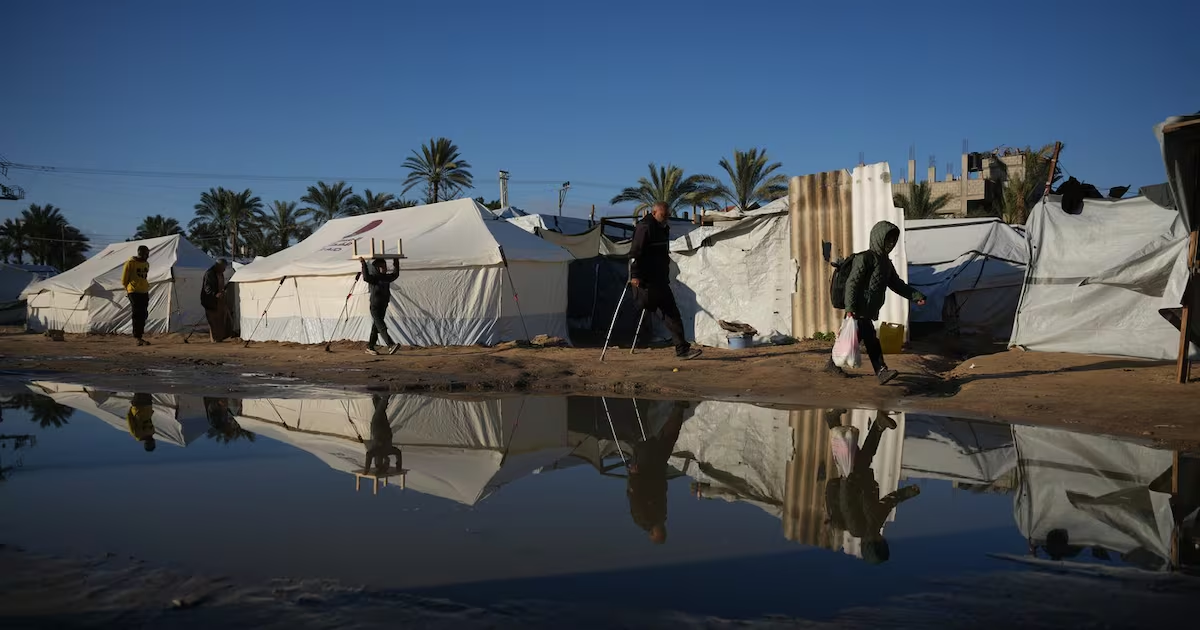
The board is charged with overseeing the second phase of a ceasefire that began on Oct. 10. Tasks outlined by U.S. officials include establishing a Palestinian committee in Gaza, deploying an international security force, overseeing disarmament of Hamas and coordinating reconstruction of the territory.
Letters sent to invited leaders described board membership as part of a broader plan tied to the U.S. 20-point Gaza ceasefire outline. Those letters said the board would shape post-conflict arrangements and support rebuilding efforts.
The Board of Peace would "embark on a bold new approach to resolving global conflict."
President Donald Trump, in letters to invited leaders
Leadership, executive committee and international partners
The White House also announced an executive committee charged with carrying out the board’s vision. Members named include former British prime minister Tony Blair; World Bank President Ajay Banga; U.S. Secretary of State Marco Rubio; Trump envoy Steve Witkoff; Jared Kushner; and Trump’s deputy national security adviser, Robert Gabriel. The committee also includes representatives from Qatar, Egypt and Turkey, which are listed as ceasefire monitors.
The list mixes political figures, private sector leaders and representatives of countries that played mediation or monitoring roles during the ceasefire. The inclusion of Turkey is notable because of its strained ties with Israel and its communications with Hamas, which could influence disarmament negotiations.
Reactions and diplomatic friction
Israel registered formal objections after the executive committee was announced, saying the move had not been coordinated with Israeli authorities. The Israeli prime minister’s office said the committee "was not coordinated with Israel and is contrary to its policy." That statement marked a rare public rebuke of Washington from a close ally.
Some diplomats have framed the Board of Peace as a potential rival to the United Nations Security Council. The Security Council, which has 15 members, has been sidelined in recent Gaza diplomacy because of repeated U.S. vetoes and reductions in funding to U.N. agencies by the U.S. administration and other donors.
What comes next
The U.S. plans to announce an official list of board members in the coming days, possibly during the World Economic Forum meeting in Davos. Details on the charter, decision-making processes and how reconstruction funds would be administered have not been released publicly.
The board’s creation, the funding conditions attached to permanent membership, and the role of its executive committee all raise questions about legitimacy, coordination among regional players and how reconstruction priorities in Gaza will be set and monitored.
The Board of Peace initiative shifts significant diplomatic and financial responsibility to a new format of international cooperation, while exposing fault lines among traditional allies and regional stakeholders. Its practical impact will depend on which countries formally join, how funds are deployed and whether key parties in Gaza accept the board’s framework.
TrumpGazaBoard of Peaceforeign policyDavos