Vatican appeals restart after prosecutors’ appeal is dismissed and chief prosecutor steps aside
An appeals hearing resumed after the Vatican’s Court of Cassation threw out prosecutors’ appeal and chief prosecutor Alessandro Diddi recused himself amid controversy over leaked WhatsApp chats.
Copy link
By Torontoer Staff
The appeals phase of the Vatican’s high‑profile financial trial resumed Tuesday after two major setbacks for the prosecution: the Vatican’s Court of Cassation rejected the prosecutors’ appeal on procedural grounds, and chief prosecutor Alessandro Diddi withdrew from the case amid controversy over private WhatsApp messages.
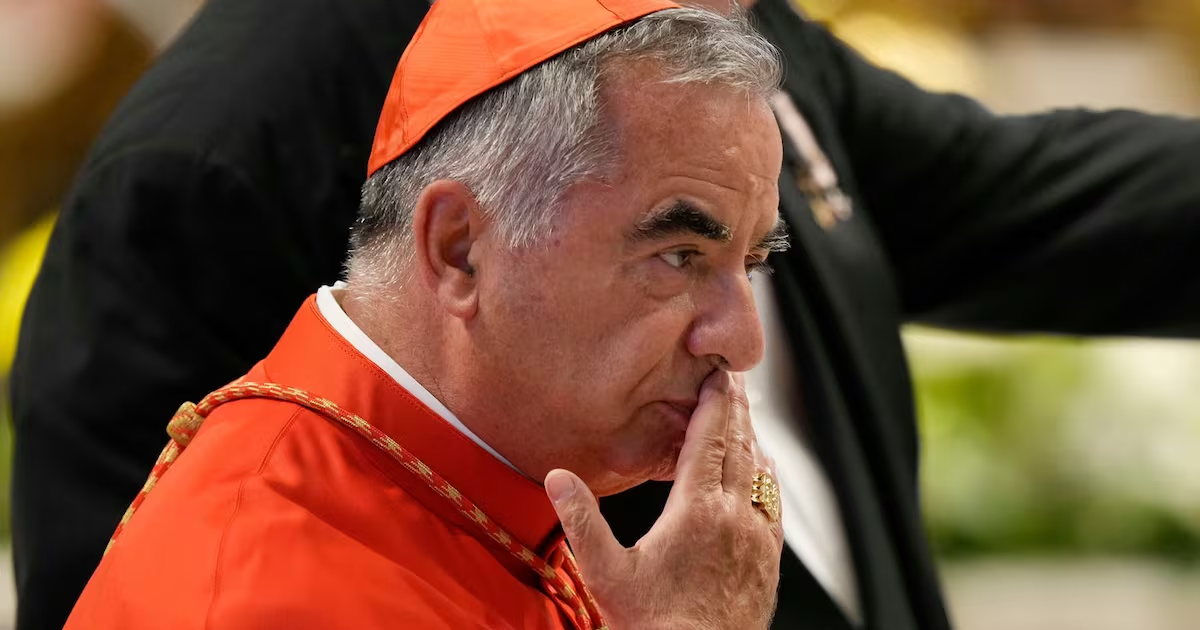
The decisions could significantly change the outcome for Cardinal Angelo Becciu and eight co‑defendants, all convicted in 2023 of various financial crimes following a long, sprawling trial centred on a costly London property investment.
Why the prosecutors’ appeal was dismissed
In its Jan. 9 ruling, the Court of Cassation said prosecutors’ appeal lacked the required specificity. The appeals chamber concluded that the document filed by Diddi essentially reattached the prosecutor’s initial request for convictions without meeting legal standards for an appeals brief. That procedural error meant the prosecution’s request to have the original verdicts and the broader conspiracy theory reinstated was thrown out.
The practical effect is narrow. Defendants can now hope to see convictions reduced or overturned, but prosecutors cannot use that appeal to press the tribunal’s original, broader theory of a grand conspiracy to defraud the Holy See.
WhatsApp chats, impartiality and Diddi’s recusal
The defence had argued that a trove of leaked WhatsApp messages showed Diddi had been partisan in his handling of evidence and witnesses. The chats revealed years of behind‑the‑scenes discussions that defence lawyers say targeted Becciu and called into question the conduct of Vatican police, prosecutors and even Pope Francis.
To prevent insinuations and falsehoods about me from being exploited to damage and prejudice the process of ascertaining the truth and affirming justice, I recuse myself from the proceedings.
Alessandro Diddi
Diddi had publicly rejected claims of bias as unfounded, and he pressed his objections with the Cassation judges. He nonetheless withdrew his objections and removed himself from the case rather than face a possible court order to be set aside. The appeals court, for now, has ruled that his prior prosecutorial actions were valid even though he recused himself later.
The London property centrepiece
The original trial focused on the Holy See’s 2014 decision to invest 350 million euros in a London real estate deal. Prosecutors said brokers and Vatican intermediaries siphoned tens of millions in fees and commissions and later extorted the Holy See for 15 million euros to cede control of the holding company involved in the transaction.
Becciu, a former senior aide to Pope Francis, was convicted of embezzlement and sentenced to five and a half years in prison. Eight other defendants were convicted of embezzlement, abuse of office, fraud and related charges but were acquitted on many counts. All have maintained their innocence and appealed their convictions.
Papal decrees and the defence’s fairness argument
Defence teams have also challenged the process by pointing to four secret executive decrees signed by Pope Francis in 2019 and 2020. The decrees, revealed only shortly before trial and never officially published, expanded prosecutorial powers for this investigation, including broader wiretapping authority and the right to deviate from existing procedures.
Legal scholars and defence lawyers say the secrecy and ad hoc nature of the decrees violated the right to a fair trial by denying the defence meaningful knowledge of the prosecution’s investigative powers. Vatican officials have privately acknowledged problems with not publishing the measures. The tribunal initially rejected arguments that the decrees breached principles of legality, noting canon law gives the pope unique authority, but the issue remains a central theme on appeal.
What to watch next
- How appellate judges treat the WhatsApp evidence and whether further questions about investigative impartiality will affect verdicts.
- Whether any convictions or sentences are reduced or overturned because prosecutors’ broader appeal was dismissed.
- Any further legal challenges tied to the secret papal decrees and the scope of prosecutorial powers used in the investigation.
The appeals process will weigh procedural flaws, questions about impartiality and foundational issues about how the Vatican investigates and prosecutes financial crime. The outcome could reshape not only the fate of Becciu and the other defendants but also how the Holy See conducts high‑stakes criminal investigations in future.
VaticanAngelo BecciuappealsCatholic ChurchAlessandro Diddi