Von der Leyen warns EU will respond if U.S. presses Greenland demand
At Davos, European Commission President Ursula von der Leyen rejected U.S. pressure linked to President Trump’s push to acquire Greenland and pledged a coordinated, proportional EU response.
Copy link
By Torontoer Staff
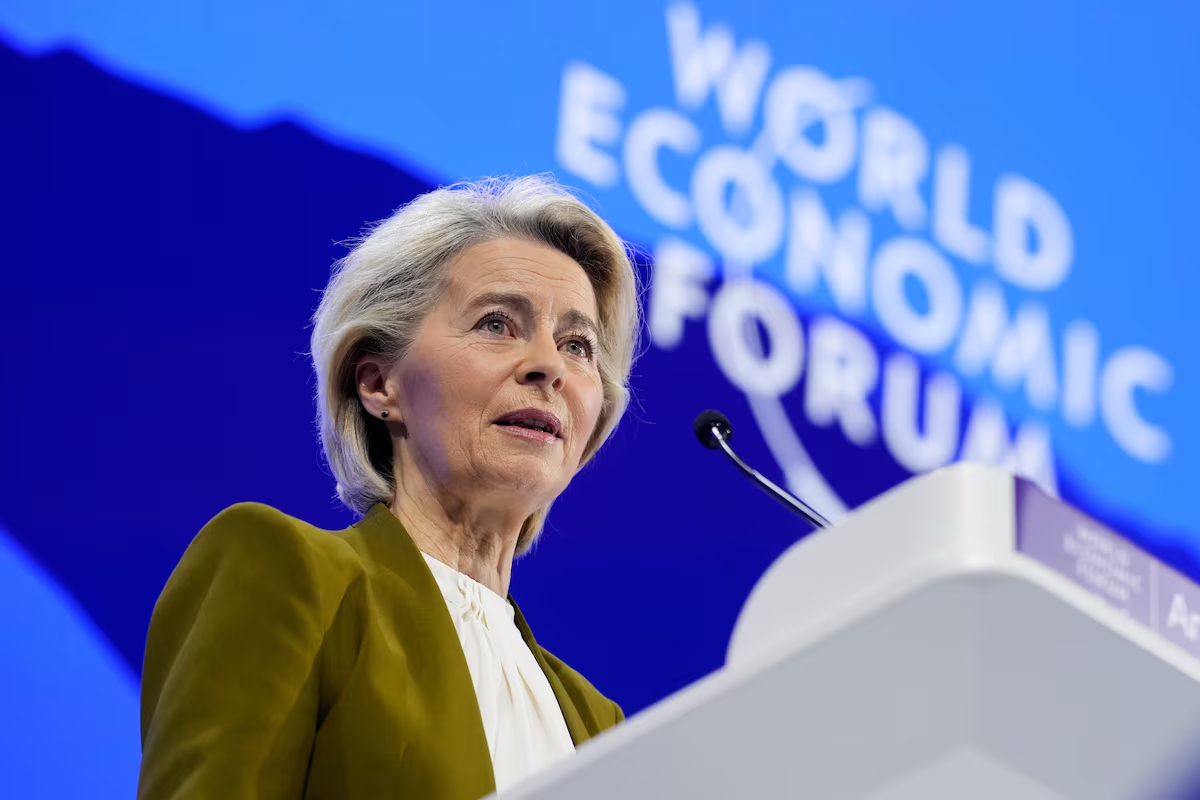
European Commission President Ursula von der Leyen pushed back at threats by U.S. President Donald Trump to raise tariffs on allies tied to his demand to acquire Greenland, saying the European Union would respond "unflinching, united and proportional." She spoke at the World Economic Forum in Davos, ahead of Mr. Trump’s scheduled arrival on Wednesday.
Ms. von der Leyen framed the issue as one of sovereignty and regional security, and said Brussels will increase investment and protective measures in Greenland while coordinating with Denmark, Greenlandic authorities and partners including the United States.
EU rejects economic coercion
Speaking in Davos, Ms. von der Leyen described the idea of using tariffs or other economic pressure to force a territorial concession as a mistake. She said the EU shares concerns about safeguarding Greenland, but underlined that Danish sovereignty over the territory is not negotiable.
The sovereignty and integrity of Danish territory is non-negotiable.
Ursula von der Leyen
Ms. von der Leyen repeated her earlier pledge to pursue a "massive European investment surge" in Greenland, aimed at supporting the local economy and infrastructure. She framed the funding as part of a broader approach to Arctic security, which she said Brussels will coordinate with allies.
What Mr. Trump has said
President Trump has publicly argued the United States should acquire Greenland, saying the island is strategically important and at risk of influence from China and Russia. He has signalled he will push the issue while at the World Economic Forum.
There is no going back on taking Greenland.
Donald Trump, as reported by The Associated Press
Mr. Trump has threatened higher tariffs on some European allies, including Britain, if they resist negotiations over Greenland. Mr. Trump’s comments about raising levies have included proposals to increase tariffs to 25 percent as early as June.
How the EU plans to respond
Brussels is pursuing a mix of diplomatic, economic and security measures. Ms. von der Leyen said the EU will work with Greenland and Denmark to identify investment projects that boost local services and infrastructure, and that the bloc will coordinate on Arctic security with the United States and other partners.
- A European investment surge in Greenland to support local economy and infrastructure
- Closer coordination with Denmark and Greenlandic authorities on development priorities
- Joint work with the United States and other partners on broader Arctic security
- Preparedness to impose proportional economic measures in response to coercion
Ms. von der Leyen did not outline specific retaliatory measures beyond reaffirming the EU would act in a united and proportional way. Her remarks signal an intent to combine financial support for Greenland with diplomatic pressure to uphold Danish sovereignty.
Why Greenland matters
Greenland sits in a strategically sensitive position in the Arctic and has natural resources that draw international interest. Governments in Europe and North America see the island as important for regional security, trade routes and scientific monitoring of the Arctic environment.
Denmark maintains sovereignty over Greenland, but the territory has home rule and its own government. That governance arrangement complicates any external proposal to purchase or annex the island, and it is a central reason Brussels insists on consulting both Copenhagen and Nuuk.
What to watch next
Expect diplomatic exchanges in coming days at Davos and afterwards in bilateral channels between the EU, Denmark and the United States. Observers will be watching for specific investment pledges for Greenland and any concrete indications of EU retaliatory tariffs or trade measures.
Ms. von der Leyen said the EU will engage with all partners to protect security and stability in the Arctic while supporting Greenland’s local priorities. The tone at Davos suggests Brussels aims to manage the dispute through coordinated investment and diplomacy rather than escalation.
As leaders return from the World Economic Forum, the dispute over Greenland is likely to remain a test of how far economic pressure will be used in international bargaining, and how quickly allies can align responses to it.
GreenlandUrsula von der LeyenDonald TrumpWorld Economic ForumArctic security