Who owns Greenland: Inuit describe land as collective responsibility, not private property
Greenlanders reject the idea their island can be bought. Inuit leaders say land is held in trust across generations, and Danish law reflects that principle.
Copy link
By Torontoer Staff
Talk of buying Greenland thrust the island into international headlines, but for many Greenlanders the idea of private ownership is foreign. Inuit leaders and residents say land is held collectively across generations, a relationship framed more as stewardship than as property that can be sold.
Denmark maintains legal sovereignty over Greenland, and the United States has called the island a strategic asset. Still, Greenlandic law and Inuit traditions limit private freehold ownership: people can own houses but not the land beneath them.
Collective stewardship, not private ownership
The idea that land belongs to a family, a corporation or a foreign state conflicts with long-standing Inuit views. "We can’t even buy our own land ourselves, but Trump wants to buy it – that’s so strange to us," said Kaaleeraq Ringsted, 74, a catechist in Kapisillit. He added that from childhood he understood land use as a communal right rather than a tradable commodity.
In our understanding, owning land is the wrong question. The question should be who is responsible for the land. The land existed before us, and it will exist after us.
Rakel Kristiansen
Nuuk-based lawyer Ulrik Blidorf said Greenland’s legal framework does not include private freehold ownership. "In Greenland, you can’t own the land," he said. "Today you get a right to use the area where you have your house." That legal position echoes traditional Inuit concepts of stewardship and communal use.
Life in Kapisillit: everyday priorities
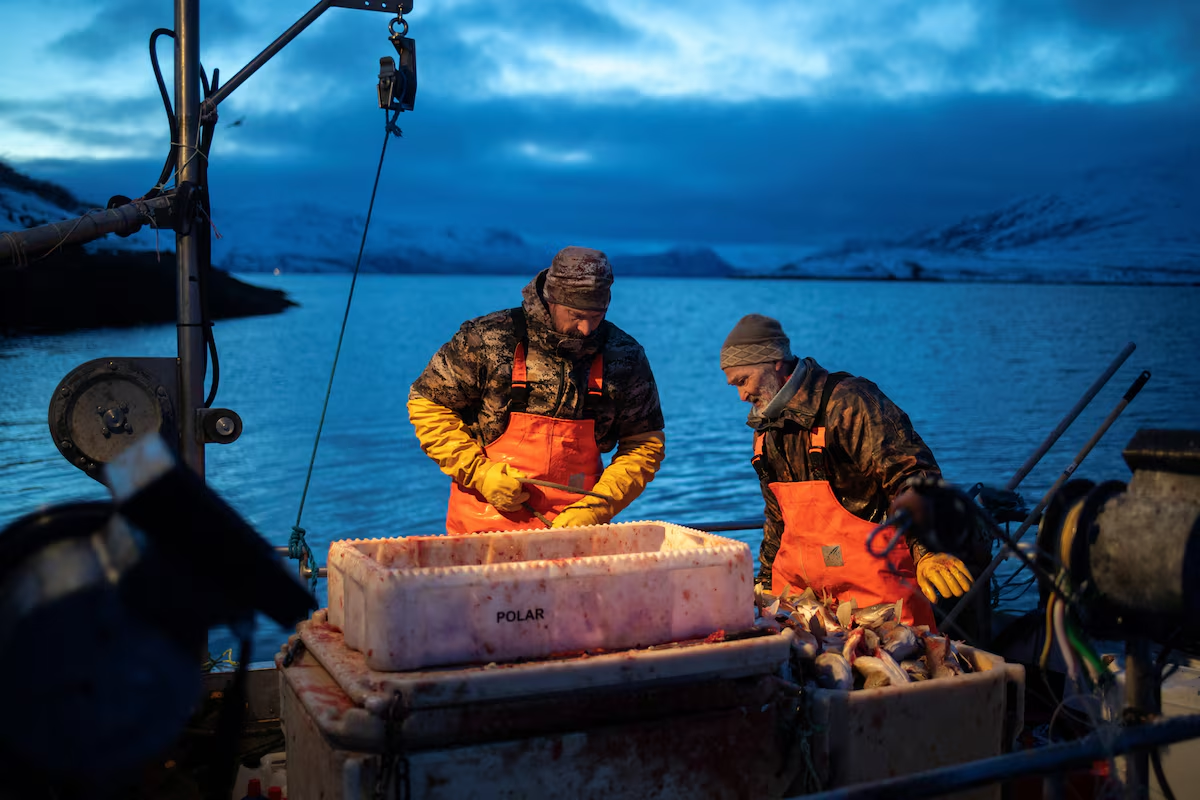
Conversations about geopolitics are present but secondary in remote settlements such as Kapisillit, a tiny village east of Nuuk. Daily life centres on fishing, hunting and maintaining basic services in a place with limited infrastructure. Residents follow headlines, but practical concerns shape most decisions.
People here are interested in the day that is coming. Is there food in the fridge? Fine, then I can sleep a little longer. If there is no food, then I will go out and catch fish or go out and shoot a reindeer.
Vanilla Mathiassen, teacher
The settlement once had nearly 500 residents. Today it has about 37. Services include a small school, a grocery store and a community washroom. Younger residents move to larger towns for education and work, leaving an ageing population and a risk that the settlement could disappear.
Some long-time residents are staying by choice. Kristiane Josefsen, who processes sealskin for national costumes, said: "I’m staying here. I belong here. This is my land. Greenland is my land." Her view reflects a personal and cultural bond to place that is not expressed in market terms.
Politics, resources and headlines
Last year U.S. President Donald Trump renewed suggestions that the United States should acquire Greenland for strategic reasons and to access mineral resources. He later softened his rhetoric, saying plans for permanent U.S. access had been secured through NATO, but many details remain unclear.
Greenland is an autonomous territory within the Kingdom of Denmark. Debates about sovereignty, resources and investment have intensified as warming Arctic conditions open access to new shipping routes and deposits. For many Greenlanders, those debates raise questions about control, benefit and cultural continuity.
What ownership means now
Nearly 90 per cent of Greenland’s roughly 57,000 residents are Inuit, a population with deep, continuous ties to the island. Legally and culturally, land is managed through use rights and communal arrangements, not freehold sales. That framework has persisted through more than 300 years of colonial influence and into contemporary governance.
- Population: about 57,000, nearly 90 per cent Inuit
- Ownership: houses can be privately owned, land generally cannot be sold as freehold
- Settlements: many small villages face depopulation as residents move for education and jobs
- Geopolitics: rising international interest in Greenland’s strategic location and resources
For many Greenlanders, the priority is practical: food security, access to services and maintaining communities. Questions about who can buy land feel remote compared with the immediate task of ensuring a viable future for small settlements.
Local views shape the debate
The international conversation about Greenland, framed by state interests and resource calculations, runs alongside a local conversation about duty and belonging. Inuit perspectives emphasise responsibility to the land and future generations. Those perspectives shape legal structures and daily choices in communities across the island.
The debate over whether Greenland can be bought is partly a legal question, but it is also a question of identity. Many Greenlanders express their relationship to place as stewardship that outlives any individual or state. That view remains central to how they live, govern and care for the island now.
GreenlandInuitArcticland rightsKapisillit