A Dovercourt lot bought for $1.45M in 2020 is now listed at $27.5M as an 11-unit multiplex
A west-end Toronto lot that sold for $1.45 million in 2020 is back on the market for $27.5 million, marketed as a luxury 11-unit rental condominium with a 2027 completion date.
Copy link
By Torontoer Staff
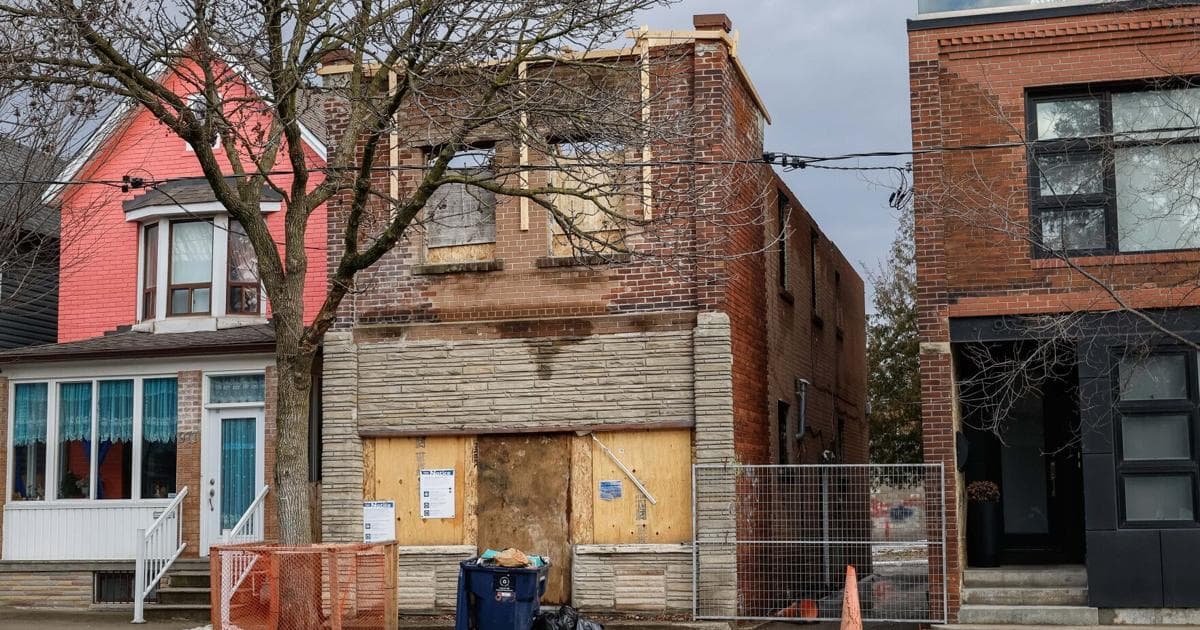
In 2020 a two-storey detached home on Dovercourt Road sold for $1.45 million. The same building still stands, now boarded up, but the lot has been relisted at $27.5 million, described in the listing as a "luxury turnkey 11-unit property" with an estimated completion in spring 2027.
The jump in price reflects the site’s marketed potential rather than the present structure. The developer behind 975 Dovercourt Rd., Carlos Jardino of PCMnow/FoxyHome, frames the project as part of the so-called missing middle, adding rental condominium supply that fits between detached homes and tall condo towers.
Why the price changed
Jardino said the 2020 sale was for an old detached home. "The current asking price reflects a multi-unit redevelopment concept and the reality that years of planning, approvals, design, and construction work, and cost change the value proposition," he wrote in an email. He added the project is being positioned as a rental condominium rather than a simple flip.
City records list the property as zoned for mixed use and show an application that would replace the existing house with a fourplex plus a two-storey laneway suite. A city spokesperson declined to provide further details about zoning approval.
How developers and investors are valuing possibility
Listings that trade on development potential are common in Toronto’s infill market. During the pandemic some older houses were sold with permits or architectural plans in place. In this case the developer is marketing a larger, higher-end multiplex product and pricing the lot on that future buildout.
"The current asking price reflects a multi-unit redevelopment concept and the reality that years of planning, approvals, design, and construction work, and cost change the value proposition."
Carlos Jardino, PCMnow/FoxyHome
Market observers say the math rarely lines up for a straight investor flip of a completed multiplex. Phil Gardner, a realtor at Elevate Realty who works on multiplex and laneway projects but is not connected to the Dovercourt listing, said investor appetite has cooled. "The numbers don't make a ton of sense as a turnkey product to another investor," he said. "People aren't quite so bullish anymore."
Comparisons with other cities and local examples
Some commentators point to Edmonton, where zoning changes in late 2023 have allowed smaller multiplexes as of right. That policy shift generated activity and investor interest there, partly because the regulatory framework and rent math differ from Toronto. Analysts say Toronto often struggles to line up land, construction and financing costs with achievable rents.
Local examples show different approaches. Jardino highlighted 5 Knight Street, marketed on future multiplex potential and sold conditionally after 118 days. He said the sale was treated as a commercial transaction because the site will be redeveloped into seven dwelling units, and that worked out to roughly $350,000 per future home for the land.
"The sale was treated as a commercial transaction because the site will be redeveloped into seven dwelling units, which works out to roughly $350,000 per future home for dirt, a very fair, market-consistent number for urban infill housing of this type."
Carlos Jardino
Who is buying and who is building
Two investor types are most active in the multiplex space. One group consists of custom home builders pivoting into multiplex work after the luxury single-family market softened. The other group looks to tear down dated bungalows and build four- or six-unit properties quickly, sometimes adding a laneway or garden suite.
- Custom builders shifting to multiplex projects as single-family demand cools
- Investors buying lots with immediate redevelopment potential
- Smaller developers marketing turnkey rental condos to capture future value
Financing remains a limiting factor. Some programs from Canada Mortgage and Housing Corporation target multiplexes, but Gardner said financing valuations do not always match sellers' expectations. That reduces the pool of buyers who could pay premium prices for a completed multiplex.
What this means for neighbourhoods and buyers
Listings that price on future builds reflect a broader shift in how city lots are valued. For neighbours the change can mean loss of an older home and a different housing form on the block. For buyers it means assessing not just the current property but approvals, construction risk and financing options.
The Dovercourt listing has been on the market since July. High asking prices for development sites do not guarantee sales, but they do show how much potential value is being placed on multiplex redevelopment in Toronto, even in a cooler market.
For now the property is an example of a wider trend: developers pricing lots by their future yield, and investors deciding whether to buy a finished product, hold through construction, or move into smaller-scale multiplex building themselves.
DovercourtmultiplexToronto real estatehousingdevelopment